
Planning: treatment guide
What Botox and filler cost: what drives the price
What affects the cost of Botox and filler?
The price of Botox and dermal filler varies by clinic and area. It depends mainly on how much product you need, which areas are treated, the type of product, the experience and qualifications of the person treating you, and where the office is. Because most results are temporary, the cost of repeat treatments is part of the picture too.[1][2][7]

Key points about cost
| Price | Varies by clinic and area. Your doctor's office can give you cost information for your treatment plan.[11] |
|---|---|
| Main factors | The amount of product, the areas and how advanced the lines are, the type of product or procedure, the provider's expertise and qualifications, the time the treatment takes, and the office location[1][2][3] |
| Repeat costs | Botox-type results last about 3 to 4 months; most fillers are temporary and need repeat treatments to maintain the look[4][8] |
| Number of sessions | Some treatments are done as a series, for example two to three RF microneedling treatments for most patients[9] |
| Other fees | For laser resurfacing, costs may include the surgical facility, anesthesia and prescriptions[3] |
| Insurance | Treatment for signs of aging is generally not covered; health insurance does not cover dermal fillers[2][4] |
| Financing | Many plastic surgeons offer patient financing plans, so ask[2][3] |
| Beyond the price | The provider's experience and your comfort with them matter as much as the final cost[1][2] |
What drives the price
The same core factors apply to injectables and laser treatments: the expertise and qualifications of the person performing the treatment, the type of procedure, the time and effort it requires, and the geographic location of the office.[1][2][3]
How much product, and where
For botulinum toxin injections, cost depends on how advanced your lines and wrinkles are and how aggressively you want to treat each area, which sets the amount of product used.[1] More areas usually mean more product.[1]
For botulinum toxin injections, cost depends on how advanced your lines and wrinkles are and how aggressively you want to treat each area, which sets the amount of product used.[1]
Average costs are reported separately for hyaluronic acid fillers, non-hyaluronic acid fillers and lip augmentation with filler, so the type of filler affects the price.[2] The time a filler's effect lasts also depends on the material and the area where it is injected.[6]
Who treats you, and where
A provider's price may reflect their expertise and qualifications, the time the treatment takes, and the office's location.[1][2]
Swipe sideways to see all three treatment types.
| Neurotoxins (Botox) | Dermal fillers | Laser resurfacing | |
|---|---|---|---|
| Price | Varies by clinic and area. | Varies by clinic and area. | Varies by clinic and area. |
| Main factors | How advanced the lines are, how aggressively each area is treated, amount of product, provider, location[1] | Type of filler, provider expertise, time and effort, location[2] | Type of procedure, provider expertise, time and effort, location[3] |
| How long results last | About 3 to 4 months, sometimes longer[4] | Depends on the filler material and the area[6] | Can take months to see results from laser scar treatment[10] |
| Insurance | Signs of aging are not covered[4] | Not covered[2] | Most plans do not cover cosmetic procedures[3][10] |
Neurotoxin pricing: Botox and similar injections
Botox, Dysport, Xeomin, Jeuveau and Daxxify are grouped together as botulinum toxin injections, and their cost depends on how advanced the lines are, how aggressively you want to treat the areas, and therefore the amount of product used.[1]
The effect lasts about 3 to 4 months and sometimes longer. You can be treated again when lines return, and with repeat treatment for lines and wrinkles the muscle may thin, leading to longer-lasting results.[5] When you budget, think about how often you plan to repeat treatment, not just a single visit.
Filler pricing: lips, cheeks and more
Dermal fillers come in different materials. The FDA lists hyaluronic acid, calcium hydroxylapatite and poly-L-lactic acid as temporary filler materials, and one approved filler made with PMMA beads that the body does not absorb.[7]
Most fillers offer temporary results and require repeat treatments to maintain them.[8] How long the effect lasts depends on the filler material and the area where it is injected, so the same budget can stretch differently for lips, cheeks or the jawline.[6]
Health insurance does not cover dermal fillers.[2]
Lasers and skin treatments: think in series
Many skin treatments are planned as more than one visit. For example, studies of RF microneedling most often used one to three treatment sessions.[9] Ask how many sessions your plan includes when you compare quotes.
For laser skin resurfacing, such as CO2 or erbium laser treatment, the quoted procedure price may not include related expenses such as surgical facility costs, anesthesia fees and prescriptions for medication, so ask about all costs involved.[3]
It can take months to see the results of laser scar treatment, and insurance providers consider laser treatments cosmetic, so they may not cover the cost.[10]
Insurance, financing and the total cost
- For botulinum toxin, signs of aging are not covered by insurance; excessive sweating may be covered, at least partly. Check your own policy.[4]
- Health insurance does not cover dermal fillers.[2]
- Most health insurance plans do not cover cosmetic surgery or its complications.[3]
- Many plastic surgeons offer patient financing plans, so be sure to ask.[2][3]
- Your doctor's office can give you cost information; then check whether insurance covers any part of the procedure.[11]
Why the lowest price is not the whole story
Remember that the provider's experience and your comfort with them are just as important as the final cost.[1][2]
In 2024 the FDA warned that counterfeit Botox had been found in multiple states and given to people for cosmetic purposes, with adverse events including hospitalizations. The products appear to have been bought from unlicensed sources. The FDA advises confirming with your health care professional that your product comes from an authorized source, and asking whether they are licensed and trained to give it.[12]
The FDA also warns against buying lip or facial fillers sold directly to the public, which may be fake, contaminated or not approved for use in the U.S.[7] For help choosing a qualified injector, see How to choose a provider.
A quality med spa should offer a consultation and be transparent about risks, expected results and costs.[13]
Frequently asked questions about cost
How much does Botox cost?
Varies by clinic and area. The price depends on how advanced your lines are, how aggressively each area is treated and so how much product is used, plus the provider's expertise and the office location.[1]
How much do dermal fillers cost?
Varies by clinic and area. It depends on the type of filler, the provider's expertise and qualifications, the time the treatment takes and the location of the office.[2]
Why do prices differ so much between clinics?
The provider's expertise and qualifications, the type of procedure, the time and effort involved and the geographic location are factors in what a provider charges.[1][2][3]
Does insurance cover Botox or filler?
Treatment for signs of aging is generally not covered. Health insurance does not cover dermal fillers. Botulinum toxin for excessive sweating may be partly covered, so check with your insurer.[2][4]
Why would I pay again after a few months?
Botulinum toxin results last about 3 to 4 months and sometimes longer, and most fillers are temporary, so repeat treatments are needed to maintain the look.[5][8]
Is the quoted price the total cost?
Not always. For laser skin resurfacing, costs may also include the surgical facility, anesthesia and prescriptions. Some treatments are also done as a series.[3][9]
Do clinics offer payment plans?
Many plastic surgeons offer patient financing plans, so be sure to ask.[2][3]
Is low-cost Botox safe?
Price alone does not tell you. The FDA has warned about counterfeit Botox bought from unlicensed sources and linked to serious adverse events. Confirm your product comes from an authorized source and that your provider is licensed and trained to give it.[12]
SkinSync AI: Aesthetic Care
Compare clinics before you book.
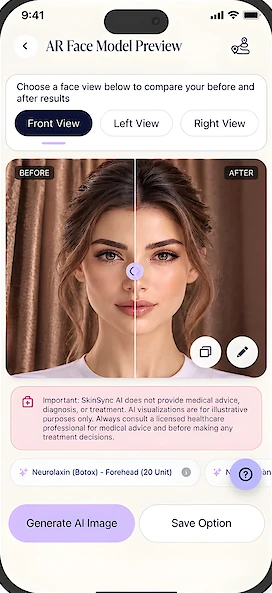
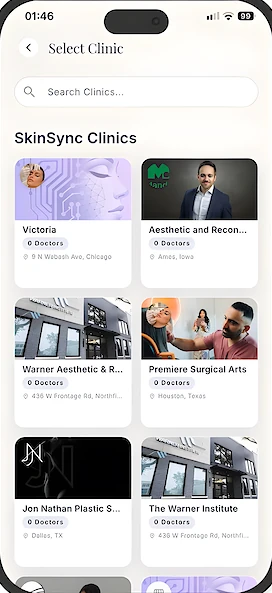
Pricing is set by each clinic, not by the simulator. In the app you can see simulations of neurotoxin and dermal filler treatments today (laser and energy-based treatments are coming soon), find participating clinics and providers with their availability and pricing, and book a consultation.
- Scan your face and see an illustrative neurotoxin or dermal filler simulation from the front and both sides
- Find participating clinics and providers, with availability and pricing
- Book a consultation, in person or virtual, or a treatment in the app
- Save your scans and get reminders and aftercare guidance


Simulations are illustrative and do not predict results. The app does not give medical advice; a licensed provider determines appropriate treatment.
Sources
Every medical fact on this page is linked to one of these sources. Reviewed October 30, 2026.
- American Society of Plastic Surgeons: How much do botulinum toxin injections cost?
- American Society of Plastic Surgeons: How much do dermal fillers cost?
- American Society of Plastic Surgeons: How much does laser skin resurfacing cost?
- American Academy of Dermatology: Botulinum toxin therapy, overview
- American Academy of Dermatology: Botulinum toxin therapy, FAQs
- U.S. Food and Drug Administration: Dermal Fillers (Soft Tissue Fillers)
- U.S. Food and Drug Administration: Dermal Filler Do's and Don'ts for Wrinkles, Lips and More
- American Academy of Dermatology: Fillers, FAQs
- Journal of Cosmetic Dermatology: Radiofrequency Microneedling for Facial Rejuvenation: A Systematic Review (2026)
- American Academy of Dermatology: Laser treatment for scars, what to expect
- American Academy of Dermatology: Best questions to ask when considering a cosmetic treatment
- U.S. Food and Drug Administration: Counterfeit Version of Botox Found in Multiple States
- American Society of Plastic Surgeons: How to Choose the Right Medical Spa for You
Related guides
Botox, Dysport, Xeomin, Jeuveau, Daxxify and Morpheus8 are trademarks of their respective owners. SkinSync AI is not affiliated with or endorsed by these companies.