
Neurotoxins: treatment guide
Dysport: what it is, results, side effects and cost
What is Dysport?
Dysport is a prescription injection of abobotulinumtoxinA, a form of botulinum toxin type A. The FDA approves it for the temporary improvement of moderate to severe frown lines between the eyebrows (glabellar lines) in adults younger than 65. It blocks the nerve signals that make the targeted muscles contract, and in the clinical studies on its FDA label it reduced the severity of frown lines for up to four months.[1][4]

Dysport quick facts
| What it is | Dysport (abobotulinumtoxinA), a prescription botulinum toxin type A injection[1] |
|---|---|
| What it treats (cosmetic) | Temporary improvement of moderate to severe frown lines between the eyebrows (glabellar lines) in adults younger than 65[1] |
| Label dose for frown lines | 50 units in total, given as five injections of 10 units each[1] |
| How long it lasts | In the label studies, Dysport reduced the severity of frown lines for up to four months[1] |
| Results timeline | Most people see results of botulinum toxin therapy within 3 to 7 days[2] |
| Treatment time | A single office visit[2] |
| Downtime | Most people return to everyday activities right away[3] |
| How often | No more often than every 3 months for frown lines[1] |
| Cost | Varies by clinic and area. Depends on how advanced the lines are, the amount of product used, the provider and location.[6] |
| Insurance | Treatment for signs of aging is generally not covered[2] |
How Dysport works
Dysport is a brand of botulinum toxin type A. Its active ingredient, abobotulinumtoxinA, is a neurotoxin that blocks the release of acetylcholine, the chemical messenger nerves use to tell muscles to contract.[1] Put simply, it is a neurotoxin that works by blocking the nerve signals that cause muscles to tighten.[4]
When a provider injects small amounts into the muscles between the brows, those muscles relax, so the vertical lines you see when you frown soften. The effect is temporary.[1][3]
For cosmetic use, the FDA approves Dysport for one area: moderate to severe frown lines between the eyebrows in adults younger than 65. The label states that it is not known whether Dysport is safe or effective for other wrinkles.[1] Dysport is also approved for medical conditions: cervical dystonia in adults and muscle spasticity in patients 2 years and older.[1]
In three placebo-controlled studies on the label, 52% to 60% of people treated with Dysport reached the studies' definition of success at day 30 (frown lines rated none or mild with at least a 2 grade improvement), compared with 0% of people who received placebo.[1]
What to expect, step by step
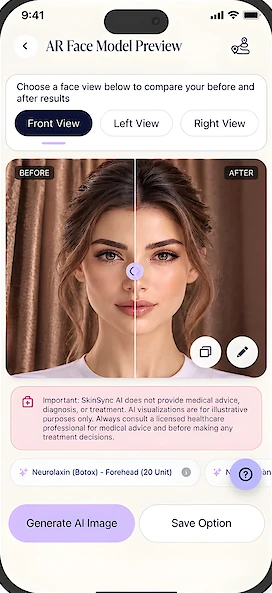
- Before your consultation: preview it in the appIf you like, scan your face in the SkinSync AI app and look at an illustrative neurotoxin simulation, so you can show your provider what you have in mind. The simulation is not specific to Dysport, it does not predict your result, and your provider decides what is appropriate for you.
- ConsultationTell your provider about your medical conditions, including any muscle or nerve disease, breathing or swallowing problems, bleeding problems, past facial surgery, drooping eyelids or dry eye after a previous botulinum toxin treatment, and any allergy to cow's milk protein.[1]
- MedicinesShare a full list of the prescription and nonprescription medicines, vitamins and supplements you take, including allergy and cold products.[4]
- PreparationDysport comes as a powder that is mixed with a liquid shortly before it is injected.[4]
- InjectionsFor frown lines, the label calls for five injections of 10 units each into the frown muscles between the brows (the procerus and corrugator muscles).[1] The treatment can be done in a single office visit.[2]
- Right afterMost people return to everyday activities immediately, and makeup can be applied as soon as you leave the treatment room.[3]
- ResultsMost people see results of botulinum toxin therapy within 3 to 7 days.[2] In the first frown line study on the Dysport label, investigators rated 90% of treated people as having no or mild frown lines at day 14, compared with 17% on placebo.[1]
- MaintenanceThe label says re-treatment for frown lines should be given no more often than every 3 months.[1] People may receive additional injections every 3 to 4 months, depending on how long the effects last.[4]
Side effects and who should avoid Dysport
Common side effects
Side effects of botulinum toxin therapy tend to be mild and temporary, and most come from the injections rather than the toxin itself.[3] In the frown line studies on the Dysport label, the most common side effects were:
- Stuffy or runny nose and sore throat, upper respiratory infection or sinus infection[1]
- Headache[1]
- Pain or a reaction where you were injected[1]
- Swelling of the eyelids or a drooping eyelid[1]
- Nausea[1]
- Blood in the urine[1]
The label also notes that people who received higher doses of Dysport had more drooping eyelids, and that dry eye has been reported after frown line treatment.[1] Bruising from the injections, if it happens, lasts about a week.[3]
Serious but rare: spread of toxin effect
The FDA label carries a boxed warning: the effects of Dysport and all botulinum toxin products may spread from the injection area and cause symptoms such as muscle weakness, double or blurred vision, drooping eyelids, and trouble swallowing, speaking or breathing. These symptoms have been reported hours to weeks after injection, and swallowing and breathing problems can be life threatening.[1] Call your doctor right away if you notice any of these.[4]
Who should avoid Dysport or talk to a provider first
- Allergy to Dysport or its ingredients, or an allergic reaction to any other botulinum toxin product[1]
- Allergy to cow's milk protein. Dysport may contain trace amounts of cow's milk protein.[1]
- Infection at the planned injection site[1]
- Muscle or nerve disease such as ALS, myasthenia gravis or Lambert-Eaton syndrome[1][4]
- Breathing or swallowing problems, now or in the past[1][4]
- Pregnancy. There are no adequate and well-controlled studies of Dysport in pregnant women.[1]
- Age. Dysport is approved for frown lines in adults younger than 65, and its safety and effectiveness for frown lines in people under 18 are not known.[1]
Only get Dysport from a licensed provider
Do not buy botulinum toxin online, and avoid injections at a non-medical spa, a party, a salon or someone's home, where serious complications have occurred.[3]
Dysport aftercare
- Do not rub or massage the treated areas, so the product does not spread where it is not wanted.[3]
- Makeup is fine if you apply it gently without pressing or rubbing.[3]
- Wait two hours before strenuous activity, such as heavy lifting or a workout. Follow your own provider's instructions.[3]
- Do not drive or do other risky activities if you notice muscle weakness, blurred vision or drooping eyelids after treatment.[1]
- Watch for warning signs such as trouble breathing, swallowing or speaking, or weakness away from the injection site, and get medical care right away.[1][4]
Dysport vs Botox vs Xeomin
Dysport, Botox and Xeomin are all botulinum toxin type A products approved by the FDA for frown lines. They differ in their approved cosmetic uses and in how their doses are measured.[1][7][8] Jeuveau (first approved in 2019) and Daxxify (first approved in 2022) are also FDA approved for frown lines.[9][10]
Swipe sideways to see all three products.
| Dysport | Botox Cosmetic | Xeomin | |
|---|---|---|---|
| Active ingredient | abobotulinumtoxinA | onabotulinumtoxinA | incobotulinumtoxinA |
| Company on the FDA label | Galderma Laboratories, L.P. and Ipsen Biopharm Ltd | Allergan, Inc. | Merz North America, Inc. |
| First U.S. approval (any use) | 2009 | 1989 | 2010 |
| FDA-approved cosmetic uses | Frown lines (adults under 65) | Frown lines, crow's feet, forehead lines, neck bands (adults) | Frown lines, forehead lines, crow's feet (adults) |
| Label dose for frown lines | 50 units | 20 units | 20 units |
| Can units be compared? | No. Each label states that its units are specific to that product and cannot be compared with or converted to units of another botulinum toxin. | ||
| Source | FDA label[1] | FDA label[7] | FDA label[8] |
The 50 unit Dysport dose and the 20 unit Botox dose cannot be compared directly, because the units are not interchangeable between products.[1] MedlinePlus puts it plainly: one brand or type of botulinum toxin cannot be substituted for another.[4] Studies suggest Dysport may start working slightly faster than Botox, while results on which lasts longer are mixed, so it is worth talking through with your provider.[5]
Which product suits you is a decision to make with a licensed provider.
Frequently asked questions about Dysport
How long does Dysport last?
In the clinical studies on the FDA label, Dysport reduced the severity of frown lines for up to four months.[1] The results of botulinum toxin therapy last about 3 to 4 months, and sometimes longer.[2]
How long does it take for Dysport to work?
Most people see results of botulinum toxin therapy within 3 to 7 days.[2] In the first frown line study on the Dysport label, 90% of treated people were rated as having no or mild frown lines by day 14.[1]
Is Dysport the same as Botox?
No. Both are botulinum toxin type A injections that relax the muscles behind expression lines, but they have different active ingredients (abobotulinumtoxinA and onabotulinumtoxinA), different approved uses and doses measured in units that cannot be compared.[1][7]
Can I switch from Botox to Dysport using the same number of units?
No. The Dysport label states that its units are specific to Dysport and cannot be compared with or converted into units of any other botulinum toxin product, so your provider doses each product on its own terms.[1][4]
What areas is Dysport approved for?
For cosmetic use, Dysport is FDA approved for moderate to severe frown lines between the eyebrows in adults younger than 65. The label says it is not known whether Dysport is safe or effective for other wrinkles.[1]
How much does Dysport cost?
Varies by clinic and area. The price of botulinum toxin injections depends on how advanced the lines are, how much product is used, the provider's expertise and the office location.[6]
Who should not get Dysport?
You should not get Dysport if you are allergic to any botulinum toxin product or its ingredients, are allergic to cow's milk protein, or have an infection at the planned injection site. Tell your provider about any muscle or nerve disease, breathing or swallowing problems, or a pregnancy.[1]
What is the biggest risk of Dysport?
The FDA label carries a boxed warning that the effect of Dysport and all botulinum toxin products can spread beyond the injection area and cause problems with swallowing, breathing or speaking, which can be life threatening. Get medical help right away if this happens. Most side effects are mild and temporary.[1][3]
How often can I get Dysport?
For frown lines, the label says re-treatment should be given no more often than every 3 months.[1] You can be treated again when lines return.[3]
Is there downtime after Dysport?
Most people return to their everyday activities right away and can apply makeup as soon as they leave the treatment room. Avoid rubbing the area and wait two hours before strenuous exercise.[3]
Does insurance cover Dysport?
Treatment for signs of aging is generally not covered by insurance. Check with your plan about medical uses.[2]
SkinSync AI: Aesthetic Care
See a simulation before you book.
Read up here, then use the app to picture a neurotoxin treatment on your own face and take the next step with a clinic. Arrive at your consultation informed and ready to ask whether Dysport or another product suits you.
- Scan your face and see an illustrative neurotoxin simulation from the front and both sides: forehead, frown lines, crow's feet, lip flip, masseter reduction and more. The simulation is not specific to Dysport or any other brand
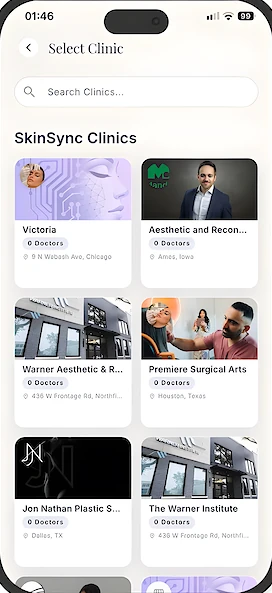
- Find participating clinics and providers, with availability and pricing
- Book a consultation, in person or virtual, or a treatment in the app
- Save your scans and get reminders and aftercare guidance


Simulations are illustrative and do not predict results. The app does not give medical advice; a licensed provider determines appropriate treatment.
Sources
Every medical fact on this page is linked to one of these sources. Reviewed October 30, 2026.
- U.S. Food and Drug Administration approved prescribing information and Medication Guide: DYSPORT (abobotulinumtoxinA), via DailyMed, National Library of Medicine
- American Academy of Dermatology: Botulinum toxin therapy, overview
- American Academy of Dermatology: Botulinum toxin therapy, FAQs
- MedlinePlus, National Library of Medicine: AbobotulinumtoxinA injection
- The Journal of Clinical and Aesthetic Dermatology: Onset and Duration of AbobotulinumtoxinA for Aesthetic Use in the Upper face: A Systematic Literature Review (2020)
- American Society of Plastic Surgeons: How much do botulinum toxin injections cost?
- FDA approved prescribing information: BOTOX Cosmetic (onabotulinumtoxinA), via DailyMed
- FDA approved prescribing information: XEOMIN (incobotulinumtoxinA), via DailyMed
- FDA approved prescribing information: JEUVEAU (prabotulinumtoxinA-xvfs), via DailyMed
- FDA approved prescribing information: DAXXIFY, via DailyMed
Related guides
Botox, Dysport, Xeomin, Jeuveau, Daxxify and Myobloc are trademarks of their respective owners. SkinSync AI is not affiliated with or endorsed by these companies.