
Dermal fillers: treatment guide
Temple filler: what it is, results, side effects and cost
What is temple filler?
Temple filler is an injection of dermal filler into the temples, the area beside the eyes and above the cheekbones, to restore volume where the temples look hollow or sunken. In 2023 the FDA approved Juvederm Voluma XC, a hyaluronic acid filler, to improve moderate to severe temple hollowing in adults over 21. In the study behind that approval, improvement lasted through 13 months of follow-up.[1][2][3]

Temple filler quick facts
| What it is | A dermal filler injected into the temple region to restore lost volume[1][3] |
|---|---|
| What it treats | Moderate to severe temple hollowing. Juvederm Voluma XC is FDA approved for this use in adults over 21.[1] |
| How long it lasts | In Juvederm Voluma XC's FDA study, improvement continued through 13 months[2][3] |
| Results timeline | Many fillers show results right away[11] |
| Treatment time | About 15 minutes to an hour, depending on how many areas are treated[10] |
| Downtime | Most activities right away; avoid intense exercise for 24 to 48 hours[8] |
| Typical sessions | One treatment, sometimes with a touch-up, repeated over time to maintain the effect[2][7] |
| Cost | Varies by clinic and area. Depends on the product and amount used, the provider and location.[9] |
| Insurance | Health insurance does not cover dermal fillers[9] |
How temple filler works
Temple hollowing is a loss of volume in the temple area. It can give the upper face a skeletal look and add to an aged appearance.[3] As we age, the face naturally loses fat under the skin.[6]
Filler restores that volume. Juvederm Voluma XC, the product the FDA approved for temple hollowing, is a hyaluronic acid gel that contains the numbing medicine lidocaine.[2] Hyaluronic acid is a sugar naturally present in the body; in gel form it holds water and swells, which creates a filling effect.[5] For the temples, Voluma XC is approved for a deep, supraperiosteal injection.[1] To learn about other filler types and areas, see the dermal fillers guide.
FDA approvals are specific to each product and area of the face, so ask your provider which product they plan to use in your temples and read its patient labeling.[4]
What to expect, step by step
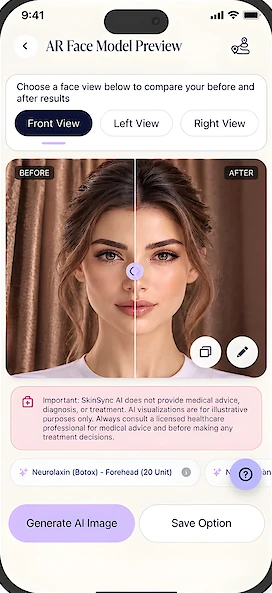
- Before your consultation: preview it in the appIf you like, scan your face in the SkinSync AI app and look at an illustrative temple filler simulation, so you can show your provider what you have in mind. A simulation does not predict your result, and your provider decides what is appropriate for you.
- ConsultationShare your goals and your medical history, including allergies and any bleeding disorder. Your provider explains the risks of the specific product and injection site.[4]
- Assessment and mappingYour provider examines the areas to be treated, may mark the injection points and may take photos.[10]
- Cleansing and numbingThe skin is cleaned with an antibacterial agent. Cold, a numbing ointment or a local anesthetic can make injections more comfortable, and Voluma XC itself contains lidocaine.[2][10]
- InjectionsEach injection takes only a few moments. The whole visit can take 15 minutes to an hour, depending on how many areas are treated.[10]
- Right afterYou may get an ice pack to reduce swelling. The area may feel tender for a day or two.[10]
- ResultsMany fillers offer results right away.[11]
- MaintenanceMost fillers fade over time, so injections are repeated to maintain the correction. In the FDA study, participants could have a repeat treatment at month 13.[2][7]
Side effects and who should avoid temple filler
Common side effects
In the FDA study of Juvederm Voluma XC for the temples, most injection site reactions were mild to moderate and went away within 14 days.[2] Side effects can include:
- Pain, tenderness or redness where you were injected[2]
- Jaw pain and headache, the most common treatment-related side effects in the study, which usually went away within a week[2]
- Swelling, bruising or itching[4]
- Lumps, filler you can feel under the skin, or uneven results[7]
Serious but rare: filler in a blood vessel
The most concerning risk of any dermal filler is accidental injection into a blood vessel, which can block blood flow. The chances are low, but complications can be serious and may be permanent, including tissue death, vision problems including blindness, and stroke.[4][7] After Juvederm Voluma XC reached the market, vision problems were reported after injections in several areas, including the temple.[2]
Seek medical help right away if you have unusual pain, vision changes, a white, gray or blue look to the skin near the injection, or signs of a stroke during or shortly after treatment.[4]
Who should avoid temple filler or talk to a provider first
- Severe allergies, a history of anaphylaxis, or allergy to gram-positive bacterial proteins or to lidocaine, for Juvederm Voluma XC[2]
- Inflamed or infected skin, including active pimples, rashes or hives. Treatment should wait until it has been managed.[4]
- A bleeding disorder[4]
- Pregnancy or breastfeeding. The safety of fillers is unknown in pregnancy and while breastfeeding.[4]
- Under 22. Voluma XC is approved for adults over 21.[1][4]
- A tendency to form keloids or raised scars, where safety is unknown[4]
Choose a qualified provider
The FDA recommends a licensed provider with experience in dermatology or plastic surgery who is trained in filler injections. Do not inject yourself and do not buy fillers online, where products may be counterfeit or unapproved.[4]
Temple filler aftercare
- Skip intense exercise for the first 24 to 48 hours to limit swelling and bruising.[8]
- Use ice to ease swelling. Ask your provider before massaging the area.[8][10]
- Expect some tenderness for a day or two.[10]
- Watch for warning signs. Vision changes, especially with pain or weakness on one side of the body, need care right away.[4][8]
Temple filler types compared
Hyaluronic acid is the filler type FDA approved for temple hollowing in Juvederm Voluma XC.[1] Other filler materials and your own fat are also used to restore facial volume, and they differ in how long they last and how easily they can be reversed.[4][5][11]
Swipe sideways to see all four options.
| Hyaluronic acid | Calcium hydroxylapatite | Poly-L-lactic acid | Your own fat | |
|---|---|---|---|---|
| What it is | A gel of a sugar naturally found in the body[5] | Mineral particles, like those in teeth and bone, in a gel[5] | A biodegradable man-made polymer[5] | Fat taken from your body with liposuction techniques and reinjected[11] |
| How long it lasts | About 6 to 12 months in general; Voluma XC's temple results continued through 13 months[2][5] | About 18 months[5] | Up to 2 years, given as a series of injections over several months[5] | The fat that survives lasts for years, but how much survives is unpredictable[11] |
| Reversible | Yes, hyaluronic acid fillers are reversible[11] | Fillers that are not hyaluronic acid may be difficult or impossible to remove[4] | Ask your surgeon | |
| FDA approval for temples | Juvederm Voluma XC is approved for temple hollowing[1] | Approvals are product and area specific; ask your provider and check the product labeling[4] | ||
Hollow temples often appear with other signs of volume loss, and some people also look at cheek filler or tear trough filler. Which option suits you is a decision to make with a licensed provider.
Frequently asked questions about temple filler
How long does temple filler last?
It depends on the product. In the clinical study behind Juvederm Voluma XC's FDA approval for the temples, improvement continued through 13 months, and the published study reported effects lasting more than a year.[2][3]
Is temple filler FDA approved?
Yes, for a specific product. In October 2023 the FDA approved Juvederm Voluma XC for supraperiosteal injection to improve moderate to severe temple hollowing in adults over 21.[1]
What causes hollow temples?
Temple hollowing is a loss of volume in the temple area, which can give a skeletal look and an aged appearance. The face naturally loses fat under the skin with age.[3][6]
How well does temple filler work?
In the randomized study of Juvederm Voluma XC for temple hollowing, 80.4% of treated participants improved by at least one grade on a temple hollowing scale at 3 months, compared with 13.5% of untreated participants.[2][3]
Is temple filler safe?
In the FDA study, side effects were mostly mild and short lived. Like any filler, it carries a rare risk of injection into a blood vessel, which can cause serious problems including vision loss, so choose a trained, licensed provider.[2][4]
Does temple filler hurt?
Voluma XC contains lidocaine to make injections more comfortable, and participants in its temple study rated procedural pain as minimal. Your provider can also use cold or a numbing cream.[2][10]
Why does my jaw hurt after temple filler?
Jaw pain was one of the most common treatment-related side effects in the FDA study of Voluma XC for the temples. Most side effects began within a week, were mild and went away within a week. Tell your provider about any pain that worries you.[2]
How much does temple filler cost?
Varies by clinic and area. Your price depends on the product and how much is used, the provider's expertise and your location. Health insurance does not cover dermal fillers.[9]
SkinSync AI: Aesthetic Care
See a simulation before you book.
Read up here, then use the app to picture temple filler on your own face and take the next step with a clinic. Arrive at your consultation informed and ready to ask the right questions.
- Scan your face and see an illustrative filler simulation from the front and both sides: temples, lips, cheeks, tear troughs, chin, jawline, nasolabial folds and more
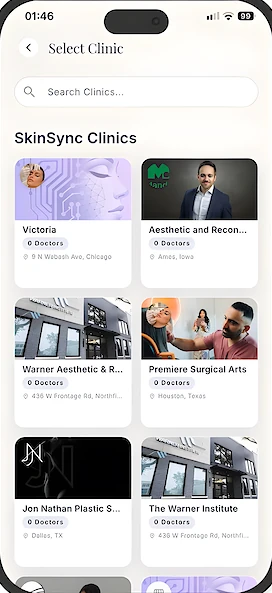
- Find participating clinics and providers, with availability and pricing
- Book a consultation, in person or virtual, or a treatment in the app
- Save your scans and get reminders and aftercare guidance


Simulations are illustrative and do not predict results. The app does not give medical advice; a licensed provider determines appropriate treatment.
Sources
Every medical fact on this page is linked to one of these sources. Reviewed October 30, 2026.
- U.S. Food and Drug Administration, Premarket Approval database: Juvederm Voluma XC, P110033/S070 (approved October 6, 2023)
- U.S. Food and Drug Administration: Summary of Safety and Effectiveness Data, Juvederm Voluma XC for temple hollowing, P110033/S070
- Montes JR, et al. Improvement in temple hollowing with VYC-20L hyaluronic acid injectable gel: a randomized controlled trial. Plast Reconstr Surg. 2025;156(1):25e-36e
- U.S. Food and Drug Administration: Dermal Fillers (Soft Tissue Fillers)
- U.S. Food and Drug Administration: FDA-Approved Dermal Fillers
- American Society of Plastic Surgeons: Dermal fillers
- American Society of Plastic Surgeons: What are the risks of dermal fillers?
- American Society of Plastic Surgeons: Dermal fillers recovery
- American Society of Plastic Surgeons: How much do dermal fillers cost?
- American Society of Plastic Surgeons: Dermal fillers procedure steps
- Medical Science Monitor: Facial Injectable Fillers in Aesthetic Medicine: Clinical Applications and Safety Strategies (2025)
- American Society of Plastic Surgeons: Who is a good candidate for dermal fillers?
Related guides
Juvederm, Voluma and Botox are trademarks of their respective owners. SkinSync AI is not affiliated with or endorsed by these companies.