
Dermal fillers: treatment guide
Tear trough filler: what it is, results, side effects and cost
What is tear trough filler?
Tear trough filler is an injection of a hyaluronic acid gel into the hollow between the lower eyelid and the cheek, called the tear trough, to soften a sunken or shadowed look under the eyes. The FDA has approved specific products, including Restylane Eyelight and Juvederm Volbella XC, to improve under-eye hollows in adults over 21. Results are temporary: in Restylane Eyelight's FDA study they lasted up to 12 months.[1][2][4]

Tear trough filler quick facts
| What it is | A hyaluronic acid gel filler injected along the tear trough, the hollow between the lower eyelid and the cheek[1][4] |
|---|---|
| What it treats | Depressed, sunken or hollow areas under the eyes (infraorbital hollowing). Restylane Eyelight and Juvederm Volbella XC are FDA approved for this use in adults over 21.[1][2] |
| How long it lasts | Up to 12 months in Restylane Eyelight's FDA study; it varies with your anatomy and the filler used[1][4] |
| Results timeline | Visible right away; full effect after about two weeks[4] |
| Treatment time | The injections take about 5 to 10 minutes[4] |
| Downtime | Minor redness or swelling is possible in the first 48 hours[4] |
| Typical sessions | In Restylane Eyelight's study, one or two treatments were needed for the best outcome[1] |
| Cost | Varies by clinic and area. Depends on the product and amount used, the provider and location.[9] |
| Insurance | Health insurance does not cover dermal fillers[9] |
How tear trough filler works
With age, the face loses volume and the cheek descends. That creates a hollow between the eye and the cheek, the tear trough, which can look like a shadow or dark circle.[4]
Tear trough filler replaces some of that lost volume. It is usually a hyaluronic acid gel. Hyaluronic acid is a sugar that is naturally present in the body; in gel form it holds water and swells, which creates a smoothing, filling effect.[4][5] Your provider places several small injections along the tear trough with a tiny needle or a blunt-tipped cannula.[4] Fillers in general can soften the shadow of the lower lids.[6] To learn about other filler types and areas, see the dermal fillers guide.
Approval is product specific. The FDA approved Restylane Eyelight in 2023 and Juvederm Volbella XC in 2021 for under-eye hollows in adults over 21.[1][2] On its general dermal filler page, the FDA lists the area around the eyes among the places where it recommends against injecting fillers, and it notes that different products are approved for specific areas of the face.[3] Ask your provider which product they plan to use and whether it is approved for the under-eye area, and read its patient labeling.[3]
What to expect, step by step
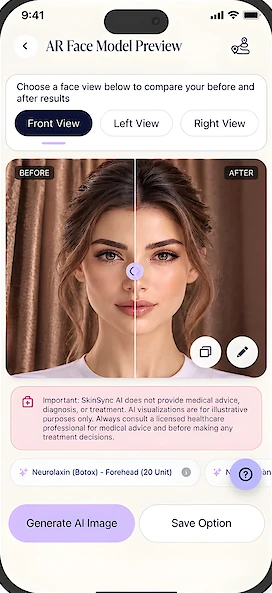
- Before your consultation: preview it in the appIf you like, scan your face in the SkinSync AI app and look at an illustrative tear trough filler simulation, so you can show your provider what you have in mind. A simulation does not predict your result, and your provider decides what is appropriate for you.
- ConsultationShare your goals and your medical history, including allergies and any bleeding disorder. Your provider reviews the risks of the specific product and injection site with you.[3]
- TimingAvoid dental work for two weeks before and after the injection, and postpone treatment if you are feeling sick.[4]
- PreparationThe skin over the tear trough is cleaned with alcohol and iced. Restylane Eyelight also contains the numbing medicine lidocaine to reduce pain on injection.[1][4]
- InjectionsSeveral small injections are placed along the tear trough with a tiny needle or a blunt-tipped cannula.[4]
- Right afterSome swelling or bruising can occur, and ice packs can help reduce it.[4]
- ResultsThe full effect can take a few weeks to judge.[4]
- MaintenanceMost fillers are absorbed by the body over time, so treatment is repeated to keep the effect.[5] Injections are typically repeated after a year or more.[4]
Side effects and who should avoid tear trough filler
Common side effects
Most side effects of dermal fillers appear soon after the injection, and many go away in a few days to weeks.[3] They can include:
- Redness, swelling or bruising where you were injected[3][4]
- Pain, tenderness or itching[3]
- Lumps, or filler you can feel under the skin[7]
- Uneven results, or under or over correction[7]
Infection is rare. A tear trough that feels hard, warm and tender is a reason to go back to your provider. Not everyone is a good candidate: some people may notice puffiness under the eyes after treatment.[4]
Serious but rare: filler in a blood vessel
The most concerning risk of any dermal filler is accidental injection into a blood vessel, which can block blood flow. The chances are low, but complications can be serious and may be permanent, including tissue death, vision problems including blindness, and stroke.[3][7]
Seek medical help right away if you have unusual pain, vision changes, a white, gray or blue look to the skin near the injection, or signs of a stroke during or shortly after treatment.[3] Extreme pain, loss of vision or seeing floaters during the injection are warning signs. Hyaluronic acid can be dissolved by your provider with an injection if needed.[4]
Who should avoid tear trough filler or talk to a provider first
- Severe allergies, a history of anaphylaxis, or allergy to gram-positive bacterial proteins or to lidocaine, for Restylane Eyelight[1]
- Inflamed or infected skin, including active pimples, rashes or hives. Treatment should wait until it has been managed.[3]
- A bleeding disorder[3]
- Pregnancy or breastfeeding. The safety of fillers is unknown in pregnancy and while breastfeeding.[3]
- Under 22. Fillers are approved for adults over 21.[1][3]
- A tendency to form keloids or raised scars, where safety is unknown[3]
Choose a qualified provider
The FDA recommends a licensed provider with experience in dermatology or plastic surgery who is trained in filler injections. Do not inject yourself and do not buy fillers online, where products may be counterfeit or unapproved.[3] See a licensed dermatologist, plastic surgeon or oculoplastic surgeon for tear trough filler rather than a med spa.[4]
Tear trough filler aftercare
- Avoid rubbing or massaging the treated area.[4]
- Use ice or a cold compress if you have swelling.[4]
- Skip intense exercise for the first 24 to 48 hours to limit swelling and bruising.[8]
- Avoid dental work for two weeks after the injection.[4]
- Watch for warning signs such as vision changes, unusual pain or skin color changes, and get care right away.[3]
Tear trough filler vs lower eyelid surgery
Filler adds volume to the hollow under the eye. Lower eyelid surgery (blepharoplasty) is an operation that can address bags under the eyes, puffiness from fat deposits, and excess skin and fine wrinkles of the lower eyelid.[4][10] For some people, surgery such as an eye lift is the best approach; fillers cannot achieve the same results.[6] A 2024 review compared moving the eye's own fat into the tear trough during surgery (fat repositioning) with hyaluronic acid filler.[11]
Swipe sideways to see both options.
| Hyaluronic acid filler | Lower eyelid surgery with fat repositioning | |
|---|---|---|
| What it is | Injections of gel along the tear trough[4] | A surgical procedure on the lower eyelids[10][11] |
| What it addresses | Volume loss and hollowing under the eyes[1][4] | Bags, fat deposits, excess skin and fine wrinkles of the lower eyelid[10] |
| How long it lasts | Temporary; needs periodic maintenance[4][11] | Long lasting[11] |
| Risks | Minimally invasive; filler risks include rare blood vessel blockage[3][11] | Higher surgical risks than filler[11] |
| Suits people who | Prefer a non-surgical treatment with short-term, adjustable effects[11] | Want long-term correction and are willing to have surgery[11] |
Under-eye hollows often sit next to the cheek, and some people also look at cheek filler. Which option suits you is a decision to make with a licensed provider.
Frequently asked questions about tear trough filler
How long does tear trough filler last?
In the clinical study behind Restylane Eyelight's FDA approval, results lasted up to 12 months. How long filler lasts varies with your anatomy and the filler used, and injections every one to two years are typical on average.[1][4]
Is tear trough filler FDA approved?
Some products are. The FDA approved Restylane Eyelight (2023) and Juvederm Volbella XC (2021) to improve under-eye hollows in adults over 21. Approvals are for specific products and areas, so ask which product your provider will use.[1][2][3]
Is tear trough filler safe?
Most side effects, such as redness, swelling and bruising, are mild and short lived. The most serious risk, accidental injection into a blood vessel, is rare but can cause vision problems including blindness. Choosing a trained, licensed provider matters.[3][4]
Does tear trough filler hurt?
Your provider ices the area first, and Restylane Eyelight contains lidocaine, a numbing medicine, to reduce pain on injection. The injections themselves take about 5 to 10 minutes.[1][4]
How much does tear trough filler cost?
Varies by clinic and area. Your price depends on the product and how much is used, the provider's expertise and your location. Health insurance does not cover dermal fillers.[9]
Can tear trough filler be dissolved?
Yes, if it is a hyaluronic acid filler. Your provider can dissolve it with an injection, for example if filler accidentally enters a blood vessel.[4][12]
What is the downtime after tear trough filler?
Most people have only minor redness or swelling in the first 48 hours. Avoid intense exercise for 24 to 48 hours, and avoid sleeping face down or touching your eyes for 48 hours.[4][8]
Should I get filler or eyelid surgery for under-eye bags?
It depends on the cause. Filler adds volume to a hollow, while lower eyelid surgery can address bags, fat deposits and excess skin. For some people surgery is the best approach. A provider can tell you which fits your anatomy.[6][10][11]
SkinSync AI: Aesthetic Care
See a simulation before you book.
Read up here, then use the app to picture tear trough filler on your own face and take the next step with a clinic. Arrive at your consultation informed and ready to ask the right questions.
- Scan your face and see an illustrative filler simulation from the front and both sides: tear troughs, lips, cheeks, temples, chin, jawline, nasolabial folds and more
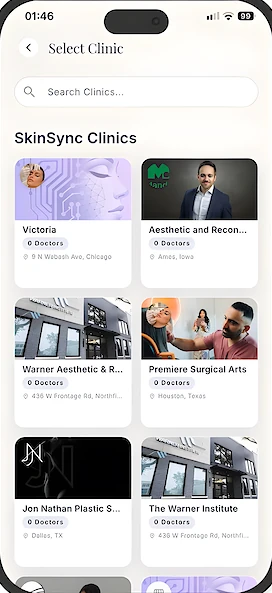
- Find participating clinics and providers, with availability and pricing
- Book a consultation, in person or virtual, or a treatment in the app
- Save your scans and get reminders and aftercare guidance


Simulations are illustrative and do not predict results. The app does not give medical advice; a licensed provider determines appropriate treatment.
Sources
Every medical fact on this page is linked to one of these sources. Reviewed October 30, 2026.
- U.S. Food and Drug Administration: Restylane Eyelight, P040024/S135 (approved May 8, 2023)
- U.S. Food and Drug Administration, Premarket Approval database: Juvederm Volbella XC, P110033/S053 (approved May 28, 2021)
- U.S. Food and Drug Administration: Dermal Fillers (Soft Tissue Fillers)
- Journal of Cutaneous and Aesthetic Surgery: Dermal Fillers for the Treatment of Tear Trough Deformity: A Review of Anatomy, Treatment Techniques, and their Outcomes (2012); Clinical, Cosmetic and Investigational Dermatology: Patient factors influencing dermal filler complications: prevention, assessment, and treatment (2015)
- U.S. Food and Drug Administration: FDA-Approved Dermal Fillers
- American Society of Plastic Surgeons: Dermal fillers
- American Society of Plastic Surgeons: What are the risks of dermal fillers?
- American Society of Plastic Surgeons: Dermal fillers recovery
- American Society of Plastic Surgeons: How much do dermal fillers cost?
- American Society of Plastic Surgeons: Eyelid surgery
- Christodoulou S, et al. Surgical and non-surgical approach for tear trough correction: fat repositioning versus hyaluronic acid fillers. J Pers Med. 2024;14(11):1096
- Medical Science Monitor: Facial Injectable Fillers in Aesthetic Medicine: Clinical Applications and Safety Strategies (2025)
- American Society of Plastic Surgeons: Who is a good candidate for dermal fillers?
Related guides
Restylane, Restylane Eyelight, Juvederm, Volbella and Botox are trademarks of their respective owners. SkinSync AI is not affiliated with or endorsed by these companies.