
Skin treatments: treatment guide
IPL photofacial: what it treats, what to expect and side effects
What is an IPL photofacial?
IPL photofacial is the name often used for intense pulsed light (IPL) treatment of the face. IPL is a nonlaser light source, also called pulsed light or broad band light, used to treat vascular and pigmented spots, sun damage, active acne and unwanted hair.[2] It is a non-ablative treatment, so it does not remove the skin surface, and pain and recovery time are typically minimal.[6]

IPL photofacial quick facts
| What it is | Intense pulsed light: a nonlaser, filtered flash lamp that gives off a broad range of light wavelengths[1][2] |
|---|---|
| Type of treatment | Non-ablative: it treats the skin without removing the surface[6][3] |
| Common uses | Sun spots and freckles, visible blood vessels and facial redness, sun damage, rosacea and unwanted hair[1][2][7] |
| Typical sessions | A series. In a systematic review, people had 3 to 7 sessions, 4.29 on average[4] |
| Downtime | Pain and recovery time are typically minimal[6] |
| Right after | Skin may be pink or red for 4 to 8 hours or longer, with a mild sunburn-like sting that usually fades in 4 to 6 hours[6] |
| Results timeline | You may not see significant changes until several weeks after treatment[6] |
| Cost | Varies by clinic and area. |
| Skin tones | Caution is needed in people with tans or naturally dark skin[1] |
How IPL works
A laser gives off a single, focused wavelength of light. IPL is different: it is a filtered flash lamp that gives off many wavelengths at once, roughly 420 to 1,400 nanometers. Because this broad light can be absorbed by several targets in the skin, IPL is less selective than a laser, so filters are used to narrow the light and make each treatment more specific.[1]
The light targets color in the skin, such as pigment in sun spots and blood in small vessels.[1][3] Its large treatment window covers a lot of skin quickly.[3]
What IPL is used for
- Pigmented spots. IPL has been used to treat freckles and sun spots (solar lentigines), with significant improvement after a series of monthly treatments.[1]
- Visible vessels and redness. IPL with appropriate filters can treat facial spider veins (telangiectasias), poikiloderma of Civatte and other vascular lesions.[1]
- Rosacea. IPL can reduce flushing and improve skin texture in rosacea, and is often used for persistent facial redness.[7]
- Sun-damaged, aging skin. Wrinkles, scarring, blemishes and sunspots are among the aging skin concerns light therapy can lessen.[6] A systematic review of 16 studies found IPL effective for skin rejuvenation, though many studies were of low quality.[4]
- Acne. Photopneumatic therapy combines IPL with a gentle vacuum to clear excess oil and dead skin cells from pores. It is FDA-approved to treat blackheads, whiteheads and some pimples, but it cannot treat acne nodules or cysts.[9]
- Hair reduction. IPL is one of several light devices shown to achieve long-lasting hair reduction.[1]
What IPL is less suited for
IPL is relatively ineffective for tattoos, because it cannot deliver the very short pulses needed to break up ink.[1] Reviews also note that IPL has limited effects on complicated skin problems.[3][4] For tattoos and stubborn pigment, see our pico laser guide.
What to expect from an IPL photofacial
Before treatment
A dermatologist will usually review your medical history and examine your skin, and discuss expectations, risks and likely outcomes.[6] For two weeks before treatment, avoid:[6]
- Sunbathing and tanning beds[6]
- Waxing, chemical peels and collagen injections[6]
- Perfumes, deodorants and other possible irritants in the treatment area[6]
- Aspirin, anti-inflammatory drugs and herbal supplements, which can raise the risk of bleeding[6]
During and right after
The light is delivered in pulses, and IPL energy can be given as single or multiple pulses.[1] Afterward, the treated area may be pink or red for 4 to 8 hours or longer, with a mild sunburn-like sting that usually fades within 4 to 6 hours. Mild swelling usually goes down within several days.[6]
Results and sessions
You may not see significant changes until several weeks after treatment.[6] IPL is usually done as a series: in the systematic review, people had a mean of 4.29 sessions, with a range of 3 to 7.[4] For rosacea, IPL needs more sessions than laser therapy.[7] For some vascular birthmarks, expect about two to three IPL sessions, followed by a yearly visit to maintain results.[8]
Side effects and who should avoid IPL
Possible side effects
Risks are minimized when a qualified dermatologist performs the treatment. They include:[6]
- Pain and swelling[6]
- Discoloration, darker or lighter patches of skin[6][1]
- Bleeding and crusting[6]
- Blistering[1]
- Infection[6]
- Scarring, which is rare[6][1]
A 2024 review raised concerns that IPL performed improperly may contribute to skin aging and other harmful skin changes, and called for careful selection of candidates, settings and standard protocols.[5]
Who should be cautious
Choosing the right device and settings matters, and caution should be used in people with a tan or naturally dark skin.[1] For hair removal, IPL with specific filters is used in people with paler skin, while other lasers are considered safer for darker skin.[1] Tell your provider about medicines and supplements that can increase bleeding.[6]
IPL aftercare
- Cool packs or moist cloths can ease stinging[6]
- Do not apply makeup or lotion to the area for 24 hours, or until all redness and stinging are gone[6]
- Apply a good moisturizing lotion twice a day during your treatment series and for at least three months after the last treatment[6]
- Keep avoiding perfumes, deodorants and other irritants on treated skin[6]
- Avoid tanning, since tanned skin needs extra caution with light treatments[1][6]
IPL vs laser treatments
IPL and lasers both use light, and they often treat the same concerns. The main difference is the light itself.[1]
Swipe sideways to compare IPL and lasers.
| IPL | Lasers | |
|---|---|---|
| Light source | Filtered flash lamp, many wavelengths, not focused (420 to 1,400 nm)[1] | A single wavelength chosen for the target[1] |
| Selectivity | Less selective; filters narrow the light[1] | More selective for a specific target[1] |
| Rosacea redness | Gentler on the skin, but needs more sessions[7] | Fewer sessions than IPL[7] |
| Pigment and tattoos | Treats freckles and sun spots; relatively ineffective for tattoos[1] | Q-switched lasers are highly effective for many benign pigmented spots and are also used for tattoos[1] |
One review found that in many cases IPL is similar to laser therapy in effectiveness.[3] Lasers come in many types. Read our guides to Laser Genesis for tone and redness, pico laser for pigment, and Fraxel for resurfacing. Chemical peels are another option for sun spots and uneven tone.
Which treatment suits your skin is a decision to make with a licensed provider.
Frequently asked questions about IPL photofacials
What does an IPL photofacial treat?
IPL is used for sun spots and freckles, visible blood vessels, sun damage, active acne and unwanted hair.[2][1] It is also used for rosacea redness and flushing.[7]
Is IPL a laser?
No. IPL is a nonlaser filtered flash lamp. Unlike a laser, it gives off many wavelengths of light at once.[1]
Does IPL hurt?
Pain is typically minimal.[6] Afterward, a mild sunburn-like sting usually fades within 4 to 6 hours, and cool packs can help.[6]
How many sessions will I need?
Usually a series. In a systematic review of 16 studies, people had 3 to 7 sessions, with an average of 4.29.[4] Your provider will suggest a plan based on what is being treated.
Is there downtime?
Recovery time is typically minimal. Redness can last 4 to 8 hours or longer, and mild swelling usually settles within several days.[6]
When will I see results?
You may not see significant changes until several weeks after treatment.[6]
Can IPL help rosacea?
Yes. IPL can reduce flushing and improve skin texture, is gentler on the skin than a laser, and needs more sessions than laser therapy. In experienced hands, it can also ease signs of rosacea affecting the eyes.[7]
Is IPL safe for darker skin?
Caution is needed. Reviews advise care in people with tans or naturally dark skin.[1] Ask your provider whether IPL or another treatment is right for your skin tone.
How much does an IPL photofacial cost?
It varies by clinic and area. Ask your provider for the cost of the full series, since IPL is usually done in several sessions.[4]
SkinSync AI: Aesthetic Care
Find a clinic and book a consultation in the SkinSync AI app.
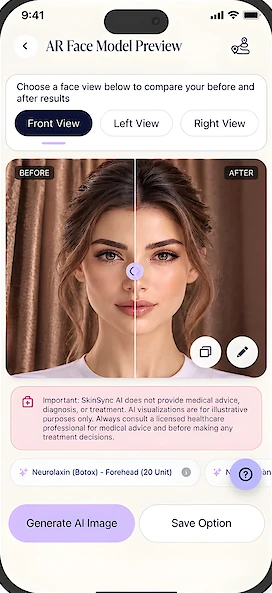
IPL photofacial is not part of the SkinSync AI simulator. In the app you can see simulations of neurotoxin and dermal filler treatments today (laser and energy-based treatments are coming soon), find participating clinics and providers with their availability and pricing, and book a consultation.
Treatments you can simulate today:
- Neurotoxins (Botox)
- Dermal fillers
- Scan your face and see an illustrative neurotoxin or filler simulation from the front and both sides
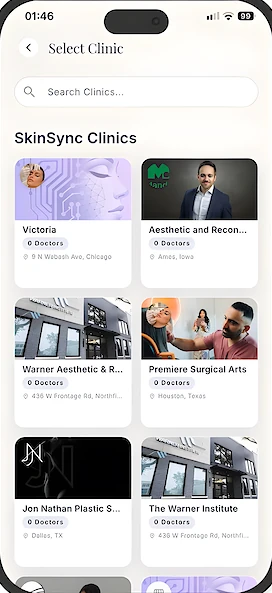
- Find participating clinics and providers, with availability and pricing
- Book a consultation, in person or virtual, or a treatment in the app
- Save your scans and get reminders and aftercare guidance


Simulations are illustrative and do not predict results. The app does not give medical advice; a licensed provider determines appropriate treatment.
Sources
Every medical fact on this page is linked to one of these sources. Reviewed October 30, 2026.
- Husain Z, Alster TS. The role of lasers and intense pulsed light technology in dermatology. Clin Cosmet Investig Dermatol. 2016;9:29-40 (PubMed)
- DiBernardo BE, Pozner JN. Intense pulsed light therapy for skin rejuvenation. Clin Plast Surg. 2016;43(3):535-540 (PubMed)
- Gonzalez-Rodriguez AJ, Lorente-Gual R. Current indications and new applications of intense pulsed light. Actas Dermosifiliogr. 2015;106(5):350-364 (PubMed)
- Sales AFS, et al. Intense pulsed light on skin rejuvenation: a systematic review. Arch Dermatol Res. 2022;314(9):823-838 (PubMed)
- Lin MY, Wong TW, Lin CS. Revisiting unaddressed safety concerns regarding intense pulsed light treatment. Photodermatol Photoimmunol Photomed. 2024;40(6):e13005 (PubMed)
- American Society for Dermatologic Surgery: Intense pulsed light therapy for aging skin
- American Academy of Dermatology: Rosacea, diagnosis and treatment
- American Academy of Dermatology: Skin conditions that lasers can treat
- American Academy of Dermatology: Lasers and lights, how well do they treat acne?
Related guides
Fraxel and Laser Genesis are trademarks of their respective owners. Botox is a trademark of its owner. SkinSync AI is not affiliated with or endorsed by these companies.