
Skin treatments: treatment guide
HydraFacial (hydradermabrasion): what it is, results, side effects and cost
What is a HydraFacial?
HydraFacial is a brand name for hydradermabrasion, an exfoliating facial treatment for skin rejuvenation.[1] Hydradermabrasion combines crystal-free microdermabrasion with a serum applied to the skin under pressure.[2] Research on it is still limited: published clinical studies are scarce and small.[1][2]

HydraFacial quick facts
| What it is | A brand of hydradermabrasion, an exfoliating facial that pairs crystal-free microdermabrasion with a pressurized serum[1][2] |
|---|---|
| What it is used for | Skin rejuvenation[1]; in one small study, fine lines, pore size and dark spots decreased after a series of treatments[2] |
| Strength of evidence | Limited: clinical studies are scarce and have been small[1][2] |
| Downtime | None[3] |
| Typical sessions | Studied as a series: six treatments spaced 7 to 10 days apart in one trial[2] |
| How long it lasts | Results of microdermabrasion-type treatments tend to be temporary, and follow-up treatments are usually needed[5] |
| Cost | Varies by clinic and area. Depends on the provider, location and any add-ons. |
| Insurance | Treatment that only improves appearance is not covered[4] |
How hydradermabrasion works
Hydradermabrasion combines crystal-free microdermabrasion, which exfoliates the surface of the skin, with the pneumatic (pressurized) application of a serum.[2] A HydraFacial is a skin rejuvenation treatment that gently exfoliates, cleanses and hydrates the skin, delivering hydrating serums such as hyaluronic acid.[3]
The evidence is still early. In a 2008 randomized study of 20 women, those who had six hydradermabrasion treatments with an antioxidant serum showed thicker outer skin layers and higher skin antioxidant levels on biopsy, and fewer fine lines, smaller pores and less hyperpigmentation. Applying the same serum by hand without the device made no detectable difference.[2] A 2024 imaging study of eight volunteers saw changes in the outer skin layer after treatment and found no visible difference in collagen in the deeper skin at two weeks; its authors note that clinical studies of hydradermabrasion are scarce.[1]
Because hydradermabrasion is a form of microdermabrasion, guidance on microdermabrasion is a useful reference. A series of microdermabrasion treatments can make the complexion appear smoother, brighter and more even, and it is used for dull skin, uneven tone or texture, age spots, dark spots left after acne and melasma.[4]
What to expect, step by step
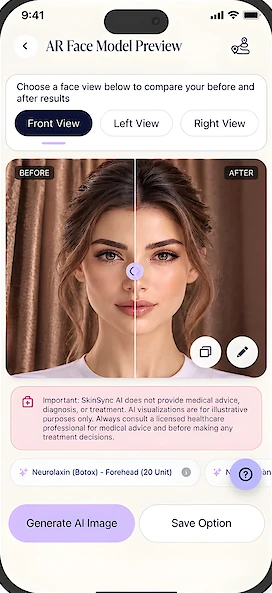
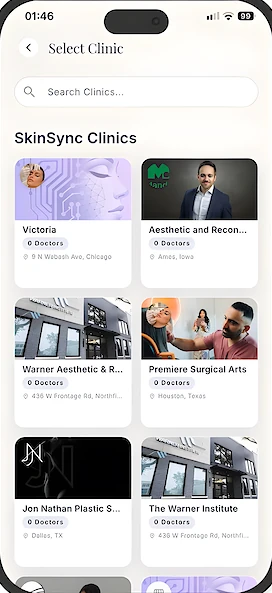
- Before your consultation: explore the appIf you like, use the SkinSync AI app to browse participating clinics and providers. The app does not simulate HydraFacial treatments, and your provider decides what is appropriate for you.
- See a dermatologist first if neededSee a dermatologist before having microdermabrasion at a spa if you have a mole or spot that is growing, bleeding or changing, have taken isotretinoin, or scar easily.[5]
- TreatmentThe device exfoliates the skin while a serum is applied under pressure.[2] A microdermabrasion treatment can feel like a sanding sensation but is not painful, and it takes about 30 to 40 minutes for the whole face.[5]
- Right afterA moisturizer is applied after microdermabrasion.[5]
- A series of treatmentsResults usually come from a series of treatments rather than one.[2][5] In the 2008 study, treatments were spaced 7 to 10 days apart.[2]
- MaintenanceResults tend to be temporary, and follow-up treatments are usually needed to keep skin smoother and more radiant.[5]
Side effects and who should avoid a HydraFacial
Common side effects
No complications were reported in the 2008 hydradermabrasion study.[2] For microdermabrasion in general, possible side effects include:[5]
- Pink or red, slightly swollen skin, like a mild sunburn or windburn, that usually fades within a day or two[5]
- Less often, bruising, burning, stinging or extra sensitivity to sunlight, which go away on their own[5]
- More dark spots in people who tend to get dark spots after acne or a skin injury[5]
Who should talk to a dermatologist first
- A changing mole or spot that is growing, bleeding or changing, which could be skin cancer[5]
- Isotretinoin (a severe acne medicine) taken in the past 6 months, which raises the risk of complications including scarring[5]
- A tendency to scar easily[5]
- A tendency to get dark spots after skin injuries[5]
Where you are treated matters
Microdermabrasion is offered in salons and non-medical spas as well as medical offices. You can reduce your risk of side effects by having it performed by a dermatologist.[5] See our guide to choosing a provider.
HydraFacial aftercare
Aftercare for microdermabrasion-type treatments is simple:[5]
- Moisturize. You may need to apply a moisturizer or other skin care product at home.[5]
- Protect your skin from the sun. Your skin care plan should include sun protection, which helps results and lowers the risk of side effects.[5]
- Space your treatments. Most people can safely have another microdermabrasion treatment a week later, though some need several weeks to recover.[5]
For aftercare across other treatments, see our aftercare guide.
Hydradermabrasion vs microdermabrasion
Hydradermabrasion is a variation on microdermabrasion that adds a pressurized serum.[2]
Swipe sideways to see both treatments.
| Hydradermabrasion (HydraFacial) | Microdermabrasion | |
|---|---|---|
| How it exfoliates | Crystal-free microdermabrasion[2] | A handheld device gently removes the top layer of skin[5] |
| What else happens | A serum is applied under pressure[2]; the Signature version adds a chemical peel, extractions and an infusion of antioxidants and hyaluronic acid[3] | A moisturizer is applied afterward[5] |
| Downtime | None listed[3] | No recovery period, though skin may be pink for a day or two[5] |
| Number of treatments | Six treatments, 7 to 10 days apart, in one study[2] | Most people receive between 5 and 16 treatments[5] |
| Evidence | Few, small clinical studies[1][2] | Excellent safety record when performed by a dermatologist[5] |
For deeper concerns, other options include chemical peels, microneedling and laser treatments such as Laser Genesis. Which suits you is a decision to make with a licensed provider.
Frequently asked questions about HydraFacial
What does a HydraFacial do?
It exfoliates the skin while a serum is applied under pressure.[2] The Signature version combines exfoliation, a chemical peel and extractions with an infusion of antioxidants and hyaluronic acid.[3]
Does a HydraFacial work?
Evidence is limited. One small 2008 study found fewer fine lines, smaller pores and less hyperpigmentation after six treatments,[2] and a 2024 study notes that clinical studies validating hydradermabrasion are scarce.[1]
Is there downtime after a HydraFacial?
There is no downtime.[3] After microdermabrasion, skin can look pink or slightly swollen for a day or two.[5]
How often can I get a HydraFacial?
In the 2008 study, treatments were spaced 7 to 10 days apart.[2] Most people can safely have another microdermabrasion treatment a week later, though some need several weeks.[5]
How long do HydraFacial results last?
Results of microdermabrasion-type treatments tend to be temporary. Protecting your skin from the sun helps them last longer, and follow-up treatments are usually needed.[5]
Who should avoid a HydraFacial?
See a dermatologist first if you have a changing mole, have taken isotretinoin in the past 6 months, or scar easily.[5]
Is a HydraFacial covered by insurance?
No. Insurance does not cover treatment that only improves appearance.[4]
SkinSync AI: Aesthetic Care
Plan your next step in the app.
HydraFacial is not part of the SkinSync AI simulator. In the app you can see simulations of neurotoxin and dermal filler treatments today (laser and energy-based treatments are coming soon), find participating clinics and providers with their availability and pricing, and book a consultation.
- Scan your face and see an illustrative neurotoxin or dermal filler simulation from the front and both sides
- Find participating clinics and providers, with availability and pricing
- Book a consultation, in person or virtual, or a treatment in the app
- Save your scans and get reminders and aftercare guidance


Simulations are illustrative and do not predict results. The app does not give medical advice; a licensed provider determines appropriate treatment.
Sources
Every medical fact on this page is linked to one of these sources. Reviewed October 30, 2026.
- Razi S, et al. Hydradermabrasion through the lens of line-field confocal optical coherence tomography. Skin Research and Technology, 2024 (PubMed)
- Freedman BM. Hydradermabrasion: an innovative modality for nonablative facial rejuvenation. Journal of Cosmetic Dermatology, 2008 (PubMed)
- Skin Research and Technology: Hydradermabrasion through the lens of Line-Field Confocal Optical Coherence Tomography (2024)
- American Academy of Dermatology: Microdermabrasion, overview
- American Academy of Dermatology: Microdermabrasion, FAQs
Related guides
HydraFacial is a trademark of its owner. SkinSync AI is not affiliated with or endorsed by this company.