
Skin treatments: treatment guide
Microneedling: how it works, results, side effects and cost
What is microneedling?
Microneedling is a minimally invasive treatment that uses tiny needles to make small holes in the skin. The skin's healing response produces more collagen and elastin, which is why it is also called collagen induction therapy.[1][2] The FDA has cleared microneedling devices to improve the appearance of facial acne scars, facial wrinkles and abdominal surgical scars in adults aged 22 and older.[3][4]

Microneedling quick facts
| What it is | A minimally invasive treatment that uses thin needles to make tiny holes in the skin, prompting it to make collagen and elastin[2][1] |
|---|---|
| Also called | Collagen induction therapy[1] |
| FDA-cleared uses | Improving the appearance of facial acne scars, facial wrinkles and abdominal surgical scars in people aged 22 and older[3][4] |
| Other common uses | Dermatologists also use it for dark spots, large pores, melasma, sagging skin, stretch marks and uneven texture and tone[1] |
| Session length | From a few minutes for a small area to a few hours, depending on the size of the area[1][2] |
| Typical sessions | Usually several. For acne scars, 3 to 5 treatments every 2 to 4 weeks[1][2] |
| Downtime | Minimal. You can usually go back to work or school right away, but wait 24 hours before makeup[1] |
| Results timeline | Improvement may show within a few weeks; full results usually take several months[1][2] |
| Cost | Varies by clinic and area. Most people need more than one treatment, so ask about the cost of the full plan.[2] |
| Skin tones | Microneedling is considered safe for all skin tones[1] |
How microneedling works
Microneedling devices have many small needles, tips or pins that go in and out of the skin. The needles may sit on a cylinder rolled across the skin, on a flat surface stamped onto the skin, or on the tip of a pen-shaped instrument. Some devices are manual; others use a motor, and in some the practitioner can adjust how deep and how fast the needles go.[3]
The tiny wounds start the skin's healing process. When the treatment is done properly, the skin heals the holes with new collagen, which can make scars and wrinkles less noticeable and even out tone and texture.[1][2] Needle lengths range from about 0.5 to 2 millimeters, and longer needles reach deeper, which may be used for scars.[2]
Medical devices vs at-home rollers
Most FDA-cleared microneedling devices are pen-shaped, motorized and penetrate the skin, and the FDA has not authorized any microneedling medical device for over-the-counter sale.[4] Rollers with short, blunt needles that only claim to exfoliate or brighten the skin are generally not medical devices.[3][4]
Products sold for home use and microneedling in a non-medical spa are not meant to puncture the skin and give less noticeable results. At-home microneedling can also irritate the skin, cause infection or scarring if it does pierce the skin, and spread warts, herpes and other viruses across the skin.[1]
Variations a dermatologist may offer
- Radiofrequency (RF) microneedling adds heat that travels down the needles, which can increase collagen production.[1] Morpheus8 is one RF microneedling device.
- Microneedling with platelet-rich plasma (PRP) applies a portion of your own blood, separated in a centrifuge, to the freshly treated skin. This combination can be especially effective for fading acne scars.[1] See our PRP facial guide.
The FDA notes that microneedling devices are not approved for delivering cosmetics, topical medicines, vitamin solutions, drugs or blood products such as PRP into the skin.[3]
What to expect from microneedling
Before treatment
You start with a consultation, where your provider examines your skin, discusses your goals, and may take photos to compare later.[2] The AAD recommends following a skin care routine for 2 to 4 weeks beforehand, which may include pausing retinoids for a few days and protecting your skin from the sun.[1]
Your treatment will be postponed if you have a tan or recent sun exposure, a skin infection, or painful, deep or pus-filled pimples. If you take isotretinoin, at least one month must pass after your last pill.[1]
During treatment
Your skin is cleaned and a numbing cream such as lidocaine is applied 15 to 45 minutes before the procedure.[2] The provider then moves a roller or an electric pen over the skin. You may feel some discomfort, and there may be a little pinpoint bleeding.[2]
Right after
Microneedling has little downtime, and most people return to their usual activities the next day.[2] Treated skin may look red (lighter skin) or darker (darker skin) and may feel sunburned, with minor burning or swelling. These reactions usually fade within a few days to a week.[1]
Results
Results appear gradually as your body makes collagen. You may see improvement within a few weeks, but full results usually take several months.[1] It can take 3 to 6 months to see full results, and treatments are spaced at least 3 weeks apart.[2] As your body loses collagen, the results fade, and your dermatologist may suggest a yearly maintenance session.[1]
Side effects and who should avoid microneedling
Common side effects
The FDA lists these common risks with authorized uses of microneedling devices:[3]
- Redness, dryness, rough skin and tightness[3]
- Itching, peeling, discomfort and burning[3]
- Bruising, bleeding and crusting[3]
These skin effects typically go away without treatment after a few days or weeks.[4]
Less common risks
- Darker or lighter patches of skin (pigmentation changes)[3]
- Lines on the face[3]
- Cold sore flare-ups[3]
- Swollen lymph nodes[3]
- Infection[3]
- Stinging or itching when skin care products are applied[3]
When someone without medical training performs microneedling, the risk of infection, scarring or long-lasting discoloration increases.[1] The risks of off-label uses, of combining microneedling with other products, and of products the FDA has not evaluated are not known.[3]
Who should avoid it
Avoid microneedling if you:[1]
- Heal slowly or poorly[1]
- Have or have had keloid scars[1]
- Have a weakened immune system from a condition or medicine[1]
- Are being treated for skin cancer in the area, or are receiving radiation treatment[1]
The FDA adds that it may not suit people with clotting or bleeding disorders such as hemophilia, uncontrolled diabetes, or who take blood thinners.[3] Talk to your provider first if you have active acne, eczema or psoriasis, or cold sores or another skin infection in the area.[2]
Microneedling aftercare
- Wait 24 hours before applying makeup[1]
- Use any post-treatment cream your dermatologist recommends to soothe the skin[1]
- An ice pack can ease irritation and discomfort
- Stay out of the sun until your skin heals[2]
- Ask your provider how to care for your skin, which may be more sensitive to sunscreen, makeup and moisturizers, especially products with retinol, glycolic acid, menthol, capsaicin or alcohol[4]
- Dry, flaking skin can improve with moisturizer[2]
- To help results last, protect your skin from the sun and do not smoke[1]
When to call your provider
Contact your provider if you notice signs of infection or anything else about your healing worries you.[2]
Microneedling vs RF microneedling vs microdermabrasion
These three treatments are often mentioned together, but they reach different depths of the skin.[2][1]
Swipe sideways to see all three treatments.
| Microneedling | RF microneedling | Microdermabrasion | |
|---|---|---|---|
| How it works | Thin needles make tiny holes that prompt collagen and elastin[2] | Microneedling that adds heat traveling down the needles[1] | A device with a rough, sandpaper-like edge exfoliates the uppermost layer; no needles[2] |
| Depth | Goes deeper than microdermabrasion, so it might work better for problems beneath the surface, such as acne scars[2] | Heat can increase collagen production[1] | Uppermost layer of skin only[2] |
| Skin tones | Considered safe for all skin tones[1] | Considered safe for all skin tones; studies included few people with darker skin[1] | Ask your provider |
| Safety notes | Common, usually short-lived redness, bruising and bleeding[3][4] | The FDA notes RF microneedling devices carry different risks and issued a safety communication on certain uses in 2025[4][3] | Ask your provider |
Some small studies suggest RF microneedling can give results similar to a laser with less downtime, but more research is needed, especially in people with darker skin.[1] Read more in our Morpheus8 guide, or compare with chemical peels and Fraxel resurfacing.
Which treatment suits your skin is a decision to make with a licensed provider.
Frequently asked questions about microneedling
What does microneedling treat?
The FDA has cleared microneedling devices to improve the appearance of facial acne scars, wrinkles around the eyes and other parts of the face and neck, and surgical scars on the abdomen, in people aged 22 and older.[4] Dermatologists also use it for dark spots, large pores, melasma, sagging skin, stretch marks and uneven texture and tone.[1]
Does microneedling hurt?
A numbing cream is applied beforehand. During treatment you may feel warmth or a scratching sensation, and some people feel discomfort near bony areas such as the cheekbones.[2]
How many sessions will I need?
Most people need more than one. For acne scars, plan on 3 to 5 treatments every 2 to 4 weeks; studies found this plan can fade acne scars by 50% to 70%.[1]
How long is the downtime?
Downtime is minimal. Redness or darkening, a sunburned feeling and minor swelling usually fade within a few days to a week, and you can return to work or school right after treatment.[1]
When will I see results, and how long do they last?
Improvement may appear within a few weeks, with full results after several months. Results fade as your body loses collagen, and a yearly maintenance session may be recommended.[1]
Is at-home microneedling the same?
No. At-home products are not meant to puncture the skin and give less noticeable results, and they can irritate the skin, cause infection or scarring, or spread viruses.[1] The FDA has not authorized any microneedling medical device for over-the-counter sale.[4]
Is microneedling safe for darker skin?
Microneedling is considered safe for all skin tones.[1] It does not carry the risk of discoloration that some heat, light or laser treatments do.[2] The FDA still lists pigment changes as a less common risk.[3]
What should I ask my provider?
The FDA suggests asking about your provider's training and experience with microneedling, how the device is cleaned between patients, and whether a new needle cartridge is used for each patient and each session. Reusing cartridges can cause or spread infection.[3][4] See also how to choose a provider.
How much does microneedling cost?
It varies by clinic and area. Because most people need multiple treatments, ask your provider about the cost of the whole treatment plan.[2]
SkinSync AI: Aesthetic Care
Find a clinic and book a consultation in the SkinSync AI app.
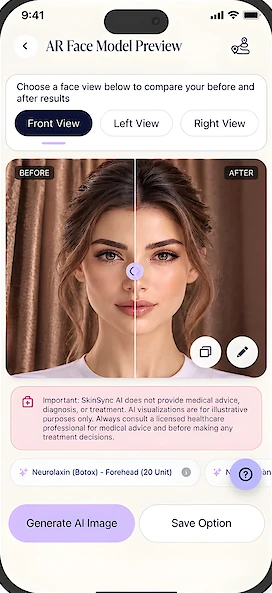
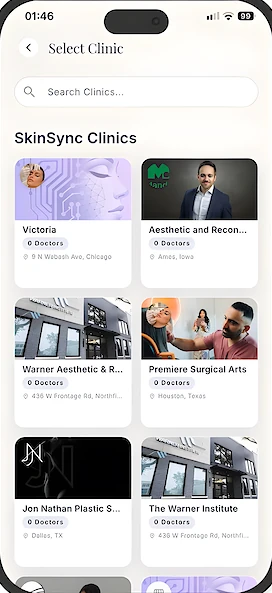
Microneedling is not part of the SkinSync AI simulator. In the app you can see simulations of neurotoxin and dermal filler treatments today (laser and energy-based treatments are coming soon), find participating clinics and providers with their availability and pricing, and book a consultation.
Treatments you can simulate today:
- Neurotoxins (Botox)
- Dermal fillers
- Scan your face and see an illustrative neurotoxin or filler simulation from the front and both sides
- Find participating clinics and providers, with availability and pricing
- Book a consultation, in person or virtual, or a treatment in the app
- Save your scans and get reminders and aftercare guidance


Simulations are illustrative and do not predict results. The app does not give medical advice; a licensed provider determines appropriate treatment.
Sources
Every medical fact on this page is linked to one of these sources. Reviewed October 30, 2026.
- American Academy of Dermatology: Microneedling can fade scars, uneven skin tone, and more
- StatPearls (NCBI Bookshelf): Microneedling (2022); Cureus: Microneedling in Dermatology: A Comprehensive Review of Applications, Techniques, and Outcomes (2024)
- U.S. Food and Drug Administration: Microneedling devices
- U.S. Food and Drug Administration: Microneedling devices, getting to the point on benefits, risks and safety
Related guides
Morpheus8 and Fraxel are trademarks of their respective owners. Botox is a trademark of its owner. SkinSync AI is not affiliated with or endorsed by these companies.