
Laser and energy-based: treatment guide
Morpheus8: what it is, results, side effects and cost
What is Morpheus8?
Morpheus8 is a brand of fractional radiofrequency (RF) microneedling made by InMode.[1] Tiny needles deliver radiofrequency energy into and under the skin to heat it, which helps stimulate new collagen and can improve wrinkles, scars and loose skin.[2][4] Results build gradually, with the best results typically 3 to 6 months after the first treatment.[4]

Morpheus8 quick facts
| What it is | A brand of fractional radiofrequency (RF) microneedling from InMode[1][9] |
|---|---|
| How it works | Microneedles deliver RF energy into and under the skin, producing heat at each needle tip[2] |
| What it treats | Wrinkles, scars and skin laxity (loose skin)[4] |
| FDA status | RF microneedling devices are Class II devices cleared through the FDA 510(k) process; the InMode System with the Morpheus8 Applicators was cleared in July 2023[2][3] |
| Typical sessions | Two to four treatments are typically recommended[4] |
| Downtime | Skin is usually mildly red for about 24 hours; most people resume their normal routine within a day[4] |
| Results timeline | Best results typically 3 to 6 months after the first treatment, as new collagen forms[4][6] |
| Cost | Varies by clinic and area. Ask the clinic for the price of the full series of treatments. |
| Insurance | Insurance rarely covers elective cosmetic procedures[4] |
How Morpheus8 works
Morpheus8 is a fractional RF microneedling device made by InMode.[1][9] Radiofrequency energy is a type of electrical energy that creates heat in tissue. RF microneedling devices use an array of tiny needle-like electrodes that penetrate the skin so the energy reaches specific depths within and under it. Each microneedle produces a small area of intense heat at its tip, which changes the tissue.[2]
Plain microneedling makes tiny holes in the top layer of skin, which prompts the skin to heal and make more collagen and elastin.[8] RF microneedling adds heat that travels down the needles, which can increase collagen production.[5] The heat reaches the deeper layer of skin, the dermis, where it starts a healing response that builds new collagen.[4]
A 2021 review of 42 higher-quality studies found RF microneedling studied for skin rejuvenation, acne scars, acne, stretch marks, underarm sweating and other conditions. It concluded that RF microneedling is effective, can be repeated safely and combined with other treatments, can be used in darker skin types, and that its collagen remodeling is slow and progressive, still improving 6 months after treatment.[6]
The FDA cleared the InMode System with the Morpheus8 Applicators through its 510(k) process in July 2023.[3] RF microneedling devices as a group are Class II medical devices cleared this way.[2]
What to expect, step by step
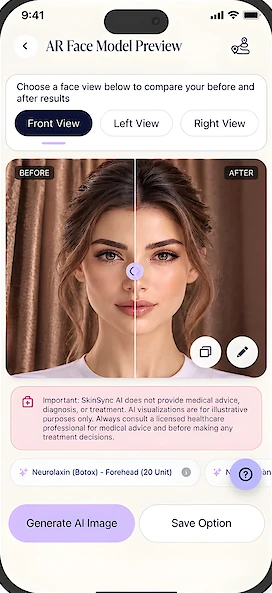
- Before your consultation: use the appMorpheus8 simulation is coming soon to the SkinSync AI app. Today you can already scan your face, see neurotoxin and filler simulations, find a clinic and book.
- ConsultationYour provider asks about your health and goals and examines your skin.[5] Ask which device they plan to use and about their training and experience with RF microneedling.[2]
- PreparationTell your provider about every medicine you take, including any blood thinner, and follow their instructions before treatment.
- Right afterRedness and swelling are common and typically settle within hours to a few days. Some people have pinpoint bleeding spots or slight bruising.[4]
- A series of treatmentsMost studies used one to three sessions, spaced three to four weeks apart.[4]
- ResultsResults build gradually as your skin makes new collagen, and studies usually measured them 3 to 6 months after treatment.[4]
Side effects and who should avoid Morpheus8
Common side effects
Side effects after RF microneedling are usually mild:[4]
- Redness and swelling that settle within hours to a few days[4]
- Mild pinpoint bleeding[4]
- Slight bruising[4]
- A sunburn-like feeling, minor discomfort, burning or swelling after microneedling, which usually clears in a few days to a week[5]
For FDA-authorized microneedling devices in general, the FDA lists common risks including dryness, tightness, redness, itching, peeling, discomfort, burning, bruising, bleeding and crusting, and less common risks including pigment changes, reactivation of cold sores, swollen lymph nodes and infection.[7]
FDA safety communication: serious complications
In October 2025 the FDA reported that serious complications have been reported with certain uses of RF microneedling devices for skin procedures, including burns, scarring, fat loss, disfigurement and nerve damage, sometimes needing surgical repair or medical treatment. The FDA advises choosing a licensed provider trained and experienced with these devices, and says RF microneedling is a medical procedure, not a cosmetic treatment, and should not be done at home.[2]
Who should avoid microneedling or talk to a provider first
The FDA and other guidance list situations in which microneedling may not be suitable, or should wait:[5][7]
- Bleeding or clotting disorders, or blood thinners such as warfarin, heparin or low-dose aspirin[7]
- A weakened immune system from a condition or medication[5][7]
- Keloid scars, or a history of them, or slow or poor healing[5][7]
- Isotretinoin taken now or recently. The FDA says within the past 6 months; other guidance says at least one month must pass after the last pill[5][7]
- An active skin infection, rash or cold sore outbreak, or painful, deep pimples[5][7]
- Eczema, psoriasis, vitiligo or autoimmune disease[7]
- Skin cancer treatment in the area, radiation, or chemotherapy[5][7]
- A tan, recent sun, or plans to be in the sun in the two weeks after treatment[5][7]
- Pregnancy or breastfeeding[7]
- Uncontrolled diabetes[7]
Not a replacement for surgery
RF microneedling is not a replacement for surgery and will not achieve the results that surgical procedures can, and not every patient is a candidate.[4] One surgeon's review of 180 neck lifts found that earlier nonsurgical neck treatments, a group that included Morpheus8 among other devices, were associated with scar-like tissue and more complex surgery.[10]
Morpheus8 aftercare
Follow your own provider's instructions first. General microneedling aftercare:
- Wait 24 hours before applying makeup.[5]
- Use the aftercare cream your dermatologist recommends to soothe the skin.[5]
- Use an ice pack to ease irritation and discomfort.
- Stay out of the sun until your skin heals, and keep protecting it from the sun afterward.[5][8]
- Do not smoke. Sun and smoking speed collagen loss, so avoiding both helps results last.[5]
- Call your provider if you have signs of infection or other problems after treatment.[8] Report any problems after RF microneedling to your provider and the FDA.[2]
RF microneedling vs microneedling
Morpheus8 is a type of microneedling. The difference is heat: RF microneedling sends radiofrequency energy down the needles, which can increase collagen production.[5]
Swipe sideways to see both treatments.
| RF microneedling (Morpheus8) | Standard microneedling | |
|---|---|---|
| What it does | Needles deliver RF heat into and under the skin[2] | Needles make tiny holes in the top layer of skin[8] |
| Typical sessions | Two to four[4] | Multiple, usually 3 to 8 weeks apart[8] |
| Recovery | Mild redness for about 24 hours; normal routine within a day[4] | Red and swollen for up to five days[8] |
| When results show | Best at 3 to 6 months[4] | 3 to 6 months[8] |
| FDA safety communication | Yes, about serious complications (2025)[2] | FDA lists common and less common risks[7] |
Compared with lasers, some studies suggest RF microneedling can give results similar to a laser with less downtime and fewer possible side effects, but those studies included only a small number of people with darker skin tones, and more research is needed.[5] To learn about laser options, see our guides to Fraxel, the CO2 laser, the erbium laser, Laser Genesis and the pico laser.
Which treatment suits you is a decision to make with a licensed provider.
Frequently asked questions about Morpheus8
Is Morpheus8 a laser?
No. Morpheus8 is fractional radiofrequency microneedling.[1] It uses tiny needle electrodes to deliver radiofrequency energy, a type of electrical energy, into and under the skin.[2]
Is Morpheus8 FDA cleared?
The FDA cleared the InMode System with the Morpheus8 Applicators through its 510(k) process in July 2023.[3] RF microneedling devices are Class II medical devices cleared through the 510(k) process.[2]
How many Morpheus8 sessions will I need?
Two to four treatments are typically recommended, and most patients receive two to three. Your physician recommends a plan based on your consultation.[4]
When will I see results?
Best results typically come 3 to 6 months after the first treatment, because your skin keeps making new collagen.[4] A review found RF microneedling results still improving 6 months after treatment.[6]
Is there downtime after Morpheus8?
Usually very little. Skin is typically mildly red for about 24 hours, and most people resume their normal routine within a day.[4] After microneedling, wait 24 hours before applying makeup.[5]
Does Morpheus8 hurt?
It is done under topical numbing, and RF microneedling is described as nearly painless.[4] Afterward, skin can feel sunburned for a few days.[5]
Is Morpheus8 safe for darker skin?
RF microneedling is safe for all skin tones, and a review found it can be used in darker skin types.[5][6] The FDA notes a risk of darkening or lightening of the skin in darker skin types after microneedling, and that some authorized devices were not studied in darker skin.[7] Choose a provider experienced with your skin tone.
What are the serious risks?
The FDA has received reports of serious complications with certain uses of RF microneedling, including burns, scarring, fat loss, disfigurement and nerve damage.[2] Choose a licensed provider trained in RF microneedling and ask which device they use.[2]
Can Morpheus8 replace a facelift?
No. RF microneedling is not a replacement for surgery and will not achieve the results that surgery can.[4]
Can I do RF microneedling at home?
No. The FDA says RF microneedling is a medical procedure, not a cosmetic treatment, and these devices should not be used at home.[2]
Can I see a Morpheus8 simulation in the SkinSync AI app?
Not yet. Morpheus8 simulation, for skin tightening and collagen remodeling via RF microneedling, is coming soon. Today you can already scan your face, see neurotoxin and filler simulations, find a clinic and book. Simulations are illustrative and do not predict results.
SkinSync AI: Aesthetic Care
Coming soon
See a simulation before you book.
Morpheus8 simulation is coming soon to the SkinSync AI app. Today you can already scan your face, see neurotoxin and filler simulations, find a clinic and book.
- Coming soon: an illustrative Morpheus8 simulation for skin tightening and collagen remodeling via RF microneedling
- Available now: scan your face and see illustrative neurotoxin and filler simulations from the front and both sides
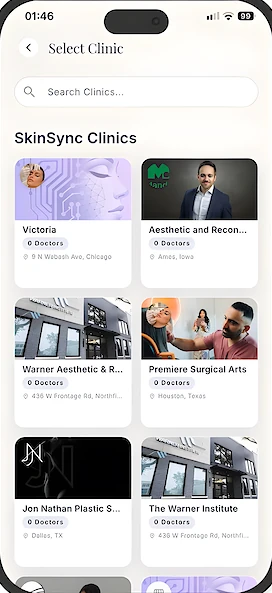
- Find participating clinics and providers, with availability and pricing
- Book a consultation, in person or virtual, or a treatment directly in the app
- Save your scans and get reminders and aftercare guidance


Simulations are illustrative and do not predict results. The app does not give medical advice; a licensed provider determines appropriate treatment.
Sources
Every medical fact on this page is linked to one of these sources. Reviewed October 30, 2026.
- Hendricks AJ, Farhang SZ. Dermatologic facial applications of Morpheus8 fractional radiofrequency microneedling. Journal of Cosmetic Dermatology, 2022 (PubMed)
- U.S. Food and Drug Administration: Potential risks with certain uses of radiofrequency (RF) microneedling, FDA safety communication (October 15, 2025)
- U.S. Food and Drug Administration 510(k) database: K231790, The InMode System with the Morpheus8 Applicators (decision July 20, 2023)
- Journal of Cosmetic Dermatology: Radiofrequency Microneedling for Facial Rejuvenation: A Systematic Review (2026)
- American Academy of Dermatology: Microneedling can fade scars, uneven skin tone, and more
- Tan MG, Jo CE, Chapas A, Khetarpal S, Dover JS. Radiofrequency microneedling: a comprehensive and critical review. Dermatologic Surgery, 2021 (PubMed)
- U.S. Food and Drug Administration: Microneedling devices
- StatPearls (NCBI Bookshelf): Microneedling (2022)
- Magro I, Kochhar A, Arnaoutakis D, et al. Transcutaneous radiofrequency microneedling in the facial plastic surgeon's practice: a review. Facial Plastic Surgery and Aesthetic Medicine, 2022 (PubMed)
- O'Daniel TG, Patton S. Neck lift after nonsurgical treatments: fibrosis, fat loss, and surgical complexity. Aesthetic Surgery Journal, 2026 (PubMed)
Related guides
Morpheus8, InMode, Fraxel and Laser Genesis are trademarks of their respective owners. SkinSync AI is not affiliated with or endorsed by these companies.