
Laser and energy-based: treatment guide
Laser Genesis: what it is, results, side effects and cost
What is Laser Genesis?
Laser Genesis is a brand-name, non-ablative laser treatment that uses a long-pulsed 1064 nm Nd:YAG laser.[1][2] Non-ablative lasers heat the skin below the surface without removing its outer layer.[4][5] In a small study of a microsecond 1064 nm Nd:YAG laser, people with facial redness saw less redness, and skin samples showed signs of new collagen after three sessions.[3]

Laser Genesis quick facts
| What it is | A brand-name treatment using a long-pulsed 1064 nm Nd:YAG laser, a near-infrared laser[1][2] |
|---|---|
| Type of laser | Non-ablative: it heats the skin below the surface and leaves the outer layer intact[4][5] |
| What this kind of laser has been studied for | Facial redness and new collagen formation, fine lines around the eyes, and redness and visible blood vessels from rosacea (1064 nm Nd:YAG)[1][3][7] |
| Typical sessions | A series. Non-ablative treatments usually need multiple sessions; the studies cited here used three sessions[3][5][7] |
| Results timeline | Gradual; non-ablative improvement can take several months to take full effect[5] |
| Numbing | A topical anesthetic is usually applied for non-ablative laser treatment, and pain is usually minimal[5] |
| Downtime | Minimal for non-ablative lasers; most people can return to work right away[5] |
| Cost | Varies by clinic and area. Ask the clinic for the price of the full series of sessions. |
| Insurance | Laser and light treatment for rosacea is rarely covered by health insurance[6] |
How Laser Genesis works
Laser Genesis uses a 1064 nm Nd:YAG laser, a near-infrared wavelength, delivered in long pulses.[1] Published descriptions of the Laser Genesis technique, from the laser maker Cutera, apply the laser at low energy in repeated passes, with the handpiece held several centimeters from the skin.[2]
It is a non-ablative laser. Non-ablative resurfacing produces controlled heat injury in the dermis, the layer under the surface, while preserving the epidermis, the outer layer of skin.[4] The heat promotes collagen production.[5] This is different from ablative lasers such as CO2 and erbium, which remove the outer layer of skin.[8] See our CO2 laser and erbium laser guides for those treatments.
The research on this kind of laser is small. In a study of 9 people, a 300-microsecond 1064 nm Nd:YAG laser produced changes consistent with new collagen in the upper dermis 1 and 3 months after three sessions, and people with facial redness before treatment had less redness afterward. There were no adverse events in that study.[3] In a split-face study of 8 people with lines around the eyes, both Laser Genesis and a fractional radiofrequency device improved wrinkle scores after 2 months, with no significant difference between them.[1] In a split-face study of 15 people with rosacea redness and visible blood vessels, a 1064 nm Nd:YAG laser and a pulsed dye laser were both safe and effective after three sessions 4 weeks apart.[7]
What to expect, step by step
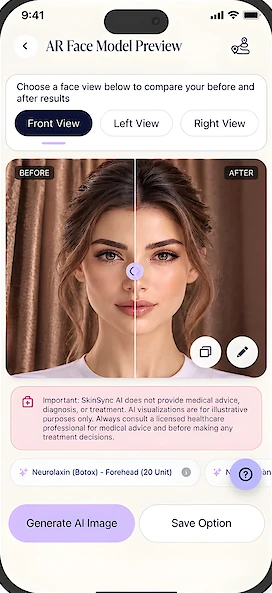
- Before your consultation: use the appLaser Genesis simulation is coming soon to the SkinSync AI app. Today you can already scan your face, see neurotoxin and filler simulations, find a clinic and book.
- ConsultationThe provider reviews your medical history and examines your skin, and you discuss realistic expectations, risks and benefits. Mention any history of cold sores.[5] Also tell them which medicines you take, including warfarin, isotretinoin and aspirin, and whether you are sensitive to light or bruise easily.[6]
- PreparationBefore non-ablative laser treatment, avoid tanning and heavy sun exposure, avoid perfumes, deodorants and other irritants on the treatment area, and avoid aspirin and other blood thinners as your provider directs.[5]
- TreatmentA topical anesthetic is usually applied, and pain is usually minimal.[5] The laser is passed over the skin at low energy in repeated passes.[2]
- Right afterRecovery after non-ablative laser treatment is minimal, and most people can return to work right away. Redness can be covered with makeup.[5]
- ResultsImprovement is gradual and can take several months to show fully.[5]
- A series of sessionsMost people need several sessions.[5] The studies cited on this page used three sessions; in the rosacea study they were 4 weeks apart.[3][7]
Side effects and who should avoid Laser Genesis
Possible side effects
Possible risks of non-ablative laser treatment include:[5]
In the small 1064 nm Nd:YAG studies cited here, no adverse events were reported in one, and no adverse effects were seen at 2 months in another.[1][3] For lasers used to treat rosacea in general, redness after treatment usually fades within 2 weeks, purple or red spots can appear and tend to clear in 1 to 2 weeks, and some people feel skin tightening, itch or pain during treatment.[6]
Results depend on who treats you
Results of laser and light treatment depend largely on the person performing it, and scarring is rare in skilled hands. Protecting your skin from the sun after treatment helps prevent permanent scars.[6]
Who should talk to a provider first
- History of cold sores or similar outbreaks[5][6]
- Medicines such as warfarin, isotretinoin or aspirin[6]
- Sensitivity to light or a tendency to bruise easily[6]
- Certain chronic health conditions, which may make the procedure inappropriate[5]
- A recent tan or heavy sun exposure[5]
Rosacea needs more than a laser
If you have rosacea, laser or light therapy may be part of your plan, but it is unlikely to be your only treatment. Dermatologists often combine medication, a rosacea-friendly skin care plan and trigger avoidance.[6]
Laser Genesis aftercare
This is general aftercare advice for non-ablative laser treatment. Follow your own provider's instructions first.[5]
Laser Genesis vs resurfacing lasers
Lasers that treat the skin fall on a spectrum. Non-ablative lasers such as the 1064 nm Nd:YAG heat the dermis and preserve the surface. Fractional lasers treat microscopic columns of skin in a regular pattern over only a fraction of the surface. Ablative lasers remove skin. Fractional treatment works better than non-ablative treatment and heals faster than ablative treatment, but neither non-ablative nor fractional resurfacing produces results comparable to ablative resurfacing.[4]
Swipe sideways to see all three types.
| Laser Genesis (non-ablative) | Fractional lasers | Ablative CO2 and erbium | |
|---|---|---|---|
| Outer layer of skin | Left intact[4][5] | Microscopic columns treated, surrounding skin left untouched[4][8] | Removed[8] |
| Recovery | Minimal; most people return to work right away[5] | About one week for fractional CO2[8] | Up to two weeks for CO2; about one week for erbium[8] |
| Strength of effect | Mildest of the three[4] | More than non-ablative[4] | Strongest[4] |
| Our guide | This page | Fraxel guide | CO2 laser and erbium laser guides |
For rosacea redness and visible blood vessels, the 1064 nm Nd:YAG laser has been compared with the pulsed dye laser: in a 15-person split-face study, excellent response one month after three sessions was seen in 73.3% of patients on the Nd:YAG side and 53.3% on the pulsed dye laser side.[7] For brown spots and pigmentation, see our pico laser guide. For skin tightening with radiofrequency microneedling, see Morpheus8.
Which treatment suits you is a decision to make with a licensed provider.
Frequently asked questions about Laser Genesis
Is Laser Genesis the same as laser resurfacing?
No. Laser Genesis uses a non-ablative 1064 nm Nd:YAG laser, which heats the skin below the surface and leaves the outer layer intact.[1][4] Ablative resurfacing with CO2 or erbium lasers removes the outer layer of skin and takes longer to heal.[8]
Does Laser Genesis reduce redness?
In a small study of a microsecond 1064 nm Nd:YAG laser, people who had facial redness before treatment had less redness after three sessions.[3] For rosacea in general, lasers can reduce redness, but in small studies most patients saw about a 20% reduction, and more research is needed.[6]
Does Laser Genesis help with fine lines?
In a split-face study of 8 people, Laser Genesis improved wrinkle scores around the eyes after 2 months, about as much as a fractional radiofrequency device.[1] Non-ablative lasers in general produce milder results than ablative resurfacing.[4]
How many sessions will I need?
Non-ablative laser treatments usually take multiple sessions.[5] The studies cited on this page used three sessions.[3][7] Your provider will suggest a plan for your skin.
Is there downtime after Laser Genesis?
Recovery after non-ablative laser treatment is minimal, and most people can return to work right away. Any redness can be covered with makeup.[5]
Does Laser Genesis hurt?
For non-ablative laser treatment, a topical numbing cream is usually applied, and pain is usually minimal.[5]
When will I see a difference?
Improvement after non-ablative laser treatment is gradual and can take several months to show fully.[5] In one study, signs of new collagen were seen 1 and 3 months after the third session.[3]
What are the side effects?
Possible risks of non-ablative laser treatment include redness, swelling, temporary lightening or darkening of the skin, infection and scarring.[5] Results depend largely on who performs the treatment.[6]
Does insurance cover Laser Genesis?
Health insurance rarely covers laser and light treatment for rosacea.[6] Ask the clinic about the price of the full series.
Can I see a Laser Genesis simulation in the SkinSync AI app?
Not yet. Laser Genesis simulation, for skin tone correction and redness reduction, is coming soon. Today you can already scan your face, see neurotoxin and filler simulations, find a clinic and book. Simulations are illustrative and do not predict results.
SkinSync AI: Aesthetic Care
Coming soon
See a simulation before you book.
Laser Genesis simulation is coming soon to the SkinSync AI app. Today you can already scan your face, see neurotoxin and filler simulations, find a clinic and book.
- Coming soon: an illustrative Laser Genesis simulation for skin tone correction and redness reduction
- Available now: scan your face and see illustrative neurotoxin and filler simulations from the front and both sides
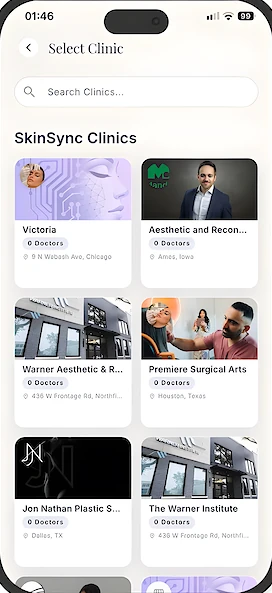
- Find participating clinics and providers, with availability and pricing
- Book a consultation, in person or virtual, or a treatment directly in the app
- Save your scans and get reminders and aftercare guidance


Simulations are illustrative and do not predict results. The app does not give medical advice; a licensed provider determines appropriate treatment.
Sources
Every medical fact on this page is linked to one of these sources. Reviewed October 30, 2026.
- Milante RR, et al. Split-face comparison of grid fractional radiofrequency vs 1064-nm Nd-YAG laser treatment of periorbital rhytides among Filipino patients. Dermatologic Therapy, 2020 (PubMed)
- Suga Y, et al. Can persistent toenail fungus be successfully treated with a laser? (long-pulsed 1,064 nm Nd:YAG, Laser Genesis technique). Medical Mycology Journal, 2014 (PubMed)
- Schmults CD, Phelps R, Goldberg DJ. Nonablative facial remodeling: erythema reduction and histologic evidence of new collagen formation using a 300-microsecond 1064-nm Nd:YAG laser. Archives of Dermatology, 2004 (PubMed)
- Alexiades-Armenakas MR, Dover JS, Arndt KA. The spectrum of laser skin resurfacing: nonablative, fractional, and ablative laser resurfacing. Journal of the American Academy of Dermatology, 2008 (PubMed)
- American Society for Dermatologic Surgery: Non-ablative laser rejuvenation
- American Academy of Dermatology: Lasers and lights: How well do they treat rosacea?
- Salem SA, et al. Neodymium-yttrium aluminum garnet laser versus pulsed dye laser in erythemato-telangiectatic rosacea. Journal of Cosmetic Dermatology, 2013 (PubMed)
- StatPearls (NCBI Bookshelf): Ablative Laser Resurfacing (2023)
Related guides
Laser Genesis, Fraxel and Morpheus8 are trademarks of their respective owners. SkinSync AI is not affiliated with or endorsed by these companies.