
Neurotoxins: treatment guide
Botox: what it is, results, side effects and cost
What is Botox?
Botox is a prescription injection of onabotulinumtoxinA, a purified form of botulinum toxin type A. Injected in small amounts into specific facial muscles, it blocks the nerve signals that make them contract, which softens lines such as frown lines, crow's feet and forehead lines. Results usually appear within 3 to 7 days and last about 3 to 4 months.[1][2][4]

Botox quick facts
| What it is | Botox Cosmetic (onabotulinumtoxinA), a prescription botulinum toxin type A injection[1] |
|---|---|
| What it treats | Temporary improvement of moderate to severe frown lines between the brows, crow's feet, forehead lines and vertical neck bands (platysma bands) in adults[1] |
| How long it lasts | About 3 to 4 months, sometimes longer[2][6] |
| Results timeline | Visible in 3 to 7 days for most people; full results within 10 to 14 days[2][4] |
| Treatment time | A single office visit; you go home the same day[2][4] |
| Downtime | Most people return to everyday activities right away[3] |
| Typical sessions | One session, repeated when lines return, on average every 3 to 4 months[3][4] |
| Cost | Varies by clinic and area. Depends on the amount of product, the areas treated, the provider and location.[5] |
| Insurance | Treatment for signs of aging is generally not covered[2] |
How Botox works
Botox is one of the best known brands of botulinum toxin, a neurotoxin made by the bacterium Clostridium botulinum. Botox is a type A toxin.[4]
When a provider injects small amounts into a specific muscle, Botox blocks the nerve signals that tell that muscle to contract. The muscle relaxes, so the lines it creates when you frown, squint or raise your brows soften.[3][4] The effect is always temporary.[4]
The FDA approves Botox Cosmetic for four areas: frown lines between the brows, crow's feet, forehead lines and vertical neck bands.[1] Botox is also used for medical conditions such as chronic migraine and excessive sweating, under a separate label.[1][4]
What to expect, step by step
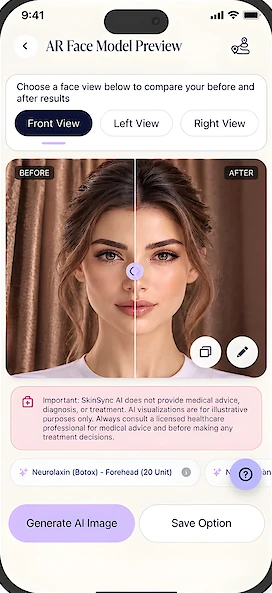
- Before your consultation: preview it in the appIf you like, scan your face in the SkinSync AI app and look at an illustrative Botox simulation, so you can show your provider what you have in mind. A simulation does not predict your result, and your provider decides what is appropriate for you.
- ConsultationShare your goals and a current list of medicines and supplements.[4]
- PreparationYour provider may apply a topical numbing agent to the skin.[4]
- InjectionsSmall amounts are injected, often at several points.[4]
- Right afterYou go home the same day and can usually return to work and most activities. You can apply makeup, taking care not to press or rub it in.[3][4]
- ResultsLines begin to soften within 3 to 7 days, with full results within 10 to 14 days.[2][4]
- MaintenanceWhen lines return, usually after about 3 to 4 months, you can be treated again. With repeat treatment, results may last longer.[3][4]
Side effects and who should avoid Botox
Common side effects
Side effects are usually mild and temporary, and most come from the injection itself.[3] They can include:
- Pain, swelling, redness or bruising where you were injected (bruising lasts about a week)[3][4]
- Headache[3][4]
- A temporarily drooping eyelid or brow, caused by weakness in a nearby muscle[1][3]
- Eye irritation or redness[4]
In the clinical trials on the FDA label, the most common side effects were a drooping eyelid (3%) after treatment of frown lines, eyelid swelling (1%) after crow's feet, and headache (9%) and drooping brow (2%) after forehead lines.[1]
Serious but rare: spread of toxin effect
The FDA label carries a boxed warning: the effect of any botulinum toxin product can spread from the injection area and cause symptoms such as trouble swallowing, breathing or speaking, which can be life threatening. These symptoms have been reported hours to weeks after injection. Get medical help right away if they occur.[1] Also call your provider promptly about vision problems or numbness or weakness in an area that was not treated.[4]
Who should avoid Botox or talk to a provider first
- Allergy to any botulinum toxin product or its ingredients[1]
- Infection at the planned injection site[1]
- Pregnancy or breastfeeding. There are no adequate studies in pregnancy, and most providers recommend waiting.[1][4]
- Neuromuscular disease, drooping eyelids or weak facial muscles[1][4]
- Heart disease, breathing problems or trouble swallowing, which call for extra caution[1]
- Under 18. Safety and effectiveness have not been established in children.[1]
Only get Botox from a licensed provider
Do not buy botulinum toxin online, and avoid injections at a non-medical spa, a party, a salon or someone's home, where serious complications have occurred.[3]
Botox aftercare
- Do not rub or massage the treated areas, especially in the first few hours.[3][4]
- Stay upright for three to four hours after treatment.[4]
- Hold off on strenuous exercise for at least two hours, and follow your own provider's instructions.[3][4]
- Makeup is fine if you apply it gently without pressing or rubbing.[3]
- Watch for warning signs such as trouble breathing, swallowing or speaking, or vision changes, and seek care right away.[1][4]
Botox vs Dysport vs Xeomin
Botox, Dysport and Xeomin are all botulinum toxin type A products approved by the FDA for frown lines. They differ in their approved uses and in how their doses are measured.[1][7][8] Jeuveau and Daxxify are also FDA approved for frown lines.[9][10]
Swipe sideways to see all three products.
| Botox Cosmetic | Dysport | Xeomin | |
|---|---|---|---|
| Active ingredient | onabotulinumtoxinA | abobotulinumtoxinA | incobotulinumtoxinA |
| Company on the FDA label | Allergan, Inc. | Galderma Laboratories, L.P. and Ipsen Biopharm Ltd | Merz North America, Inc. |
| First U.S. approval (any use) | 1989 | 2009 | 2010 |
| FDA-approved cosmetic uses | Frown lines, crow's feet, forehead lines, neck bands (adults) | Frown lines (adults under 65) | Frown lines, forehead lines, crow's feet (adults) |
| Label dose for frown lines | 20 units | 50 units | 20 units |
| Can units be compared? | No. Each label states that its units are specific to that product and cannot be compared with or converted to units of another botulinum toxin. | ||
| Source | FDA label[1] | FDA label[7] | FDA label[8] |
Which product suits you is a decision to make with a licensed provider.
Frequently asked questions about Botox
How long does Botox last?
For lines and wrinkles, the effect lasts about 3 to 4 months and sometimes longer. The toxin wears off within three to six months, after which muscles regain movement and lines return unless you are treated again.[2][3][4]
How long does it take for Botox to work?
Most people see results within 3 to 7 days. The effect is usually noticeable around the third or fourth day, with full results visible within 10 to 14 days.[2][4]
How much does Botox cost?
Varies by clinic and area. Your price depends on how much product you need, the areas treated, the provider's experience and your location.[5]
Who should not get Botox?
You should not get Botox if you are allergic to any botulinum toxin product or its ingredients, or if you have an infection where it would be injected. Tell your provider if you are pregnant or breastfeeding, or if you have a neuromuscular disease, drooping eyelids or weak facial muscles.[1][4]
What is the biggest risk of Botox?
The FDA label carries a boxed warning that the effect of any botulinum toxin product can spread beyond the injection area and cause problems with swallowing, breathing or speaking, which can be life threatening. Get medical help right away if this happens. Most side effects are mild and temporary, such as bruising, swelling or a headache.[1][3]
What is the 4-hour rule for Botox?
The phrase usually refers to staying upright after treatment. Stay upright, not lying down, for three to four hours after injections. Always follow the aftercare your own provider gives you.[4]
How many units of Botox do I need?
The FDA label lists 20 units for frown lines between the brows, 24 units for crow's feet, and 40 units when forehead lines are treated together with frown lines. Your provider decides the dose for your face and goals.[1]
Is Dysport better than Botox?
Neither is better for everyone. Both are FDA approved for frown lines, but they have different approved uses and their units are not interchangeable, so doses cannot be compared one to one. Your provider can recommend a product for your treatment areas.[1][7]
Does Botox hurt?
Most people feel little discomfort. The needles are very small, and some people describe a slight pinch or sting. Your provider can apply a numbing gel first if you are concerned.[4]
Does insurance cover Botox for wrinkles?
Generally no. Treatment for signs of aging is not covered by insurance, while treatment for medical conditions such as excessive sweating may be partly covered depending on your plan.[2]
SkinSync AI: Aesthetic Care
See a simulation before you book.
Read up here, then use the app to picture Botox on your own face and take the next step with a clinic. Arrive at your consultation informed and ready to ask the right questions.
- Scan your face and see an illustrative Botox simulation from the front and both sides: forehead, frown lines, crow's feet, lip flip, masseter reduction and more
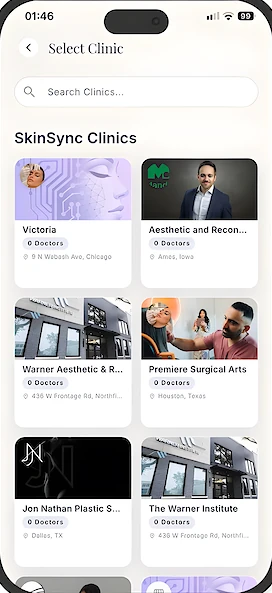
- Find participating clinics and providers, with availability and pricing
- Book a consultation, in person or virtual, or a treatment in the app
- Save your scans and get reminders and aftercare guidance


Simulations are illustrative and do not predict results. The app does not give medical advice; a licensed provider determines appropriate treatment.
Sources
Every medical fact on this page is linked to one of these sources. Reviewed October 30, 2026.
- U.S. Food and Drug Administration approved prescribing information: BOTOX Cosmetic (onabotulinumtoxinA), via DailyMed, National Library of Medicine (label revised 2026)
- American Academy of Dermatology: Botulinum toxin therapy, overview
- American Academy of Dermatology: Botulinum toxin therapy, FAQs
- MedlinePlus (U.S. National Library of Medicine): OnabotulinumtoxinA Injection; Clinical, Cosmetic and Investigational Dermatology: Botulinum toxin (Botox) A for reducing the appearance of facial wrinkles: a literature review of clinical use and pharmacological aspect (2019)
- American Society of Plastic Surgeons: How much do botulinum toxin injections cost?
- MedlinePlus (U.S. National Library of Medicine): OnabotulinumtoxinA Injection
- FDA approved prescribing information: DYSPORT (abobotulinumtoxinA), via DailyMed
- FDA approved prescribing information: XEOMIN (incobotulinumtoxinA), via DailyMed
- FDA approved prescribing information: JEUVEAU (prabotulinumtoxinA-xvfs), via DailyMed
- FDA approved prescribing information: DAXXIFY, via DailyMed
Related guides
Botox, Botox Cosmetic, Dysport, Xeomin, Jeuveau and Daxxify are trademarks of their respective owners. SkinSync AI is not affiliated with or endorsed by these companies.